Do Oil Additives Work?


oldgeek

Forum Member

Joined
Jun 1, 2022
Messages
1,001
Points
101
City
USA
Vehicle Year
94
Engine
2.3 (4 Cylinder)
Transmission
Manual
I asked Gemini to summarize this video as it is long and I didn't want to sit through it.


This is the summarization with time stamps:

The Core Conclusion

Based on statistical analysis of over 8,000 gasoline and 2,900 diesel engine samples, adding aftermarket oil additives makes no statistically significant difference in engine wear. The experts emphasize that modern engine oils are already highly optimized through millions of dollars in research and development [12:40].

Key Insights from the Data

  • Contamination is the Real Enemy: Factors like fuel dilution, silicon (dirt), and internal particles have a far greater impact on engine wear than the brand of oil or any additive used [46:02].
  • The "Break-In" Curve: Engines naturally experience high wear during their first few thousand miles. Data shows this wear levels off significantly as the engine ages, regardless of additives [35:18].
  • Psychology vs. Data: High-end vehicle owners (like Porsche or BMW drivers) are statistically more likely to use expensive oils and then add expensive additives, despite the data showing no added benefit [29:52].
  • Diesel Specifics:
    • Bypass Filters: Unlike chemical additives, physical bypass oil filters in diesel engines did show a measurable reduction in wear by better managing soot and fine particles [01:16:45].
    • Fuel Lubricity: While oil additives didn't help, the experts noted that fuel additives can be beneficial for protecting specific components like the Bosch CP4 fuel pump from low-lubricity ultra-low sulfur diesel (ULSD) [58:11].

Why Additives Can Be Risky

  • Chemical Imbalance: Adding a "chemical grenade" can throw off the carefully balanced formulation of licensed oils [02:08].
  • Seal Compatibility: Many additives are not tested for compatibility with modern engine seals and wet belts, which can lead to premature failure [01:21:50].
  • Reduced Stability: Certain additives can actually lower the oxidative stability of the oil, leading to faster degradation and deposit formation [01:23:41].

Maintenance Recommendations

  1. Use High-Efficiency Filters: Choose filters with the highest efficiency at the lowest micron rating [04:01].
  2. Follow Filter Lifespans: Don't change a high-quality filter early; it actually becomes more efficient as a "dust cake" forms during its rated life [04:40].
  3. Prioritize Cleanliness: Focus on high-quality air filtration and managing fuel dilution rather than buying "mechanic in a can" supplements [01:13:40].
 
I've watched quite a few of his videos and I think there are a couple general takeaways from all of them.

1) Modern engine oils (API SP and SQ) are great

2) Follow manufacturers recommendations and you'll pretty much be fine

It's pretty reassuring actually and really simplifies things.
 
I've watched quite a few of his videos and I think there are a couple general takeaways from all of them.

1) Modern engine oils (API SP and SQ) are great

2) Follow manufacturers recommendations and you'll pretty much be fine

It's pretty reassuring actually and really simplifies things.

ZDDP additives are rather important for young flat tappet camshafts however and are very lacking from most modern oils.
 
ZDDP additives are rather important for young flat tappet camshafts however and are very lacking from most modern oils.
Yeah, he has at least one video specifically on that topic. One thing I learned is that ZDDP and detergents fight each other. I've been a big Rotella fan for my flat tappet cars for decades, but his testing showed than a standard SQ oil was better for wear metals than Rotella in a gas engine.

I tend to give him a high degree of credibility as he has done oil formulation for a couple major oil companies, and yet he seems to stay pretty brand-agnostic.
 
he is coolz.

met him a few times and his packaging of rings for several projects with companies in detroit area is based on oils and formulation combined with ring tension and fuel types.

rotella does work well with many gasoline applications...the diesel oil...not the gasoline oil ...this is assumed why it is mentioned...

and certain additives do work well once an engine is damaged and well worn and on the way out.

based on the last 3 years testing and reporting and current 500k reporting capacity with the ecoboost engines...i am on the restore and protect train.

always a valvoline fan for my gas engines. but i ran supertech in my pushrod engines because of lakes testing specifically....once he tests a walmart version...if ever there is a walmart version...mobile 1 is offering it now...so who knows..but if they do make a version of protect and restores and lake speed clears it, i will probably go to that if cost structure is the same as current...because it is a significant savings.


but i do build engines to run with rotella or 20/50 in regards to ring package and bearing type/tolerences. that is a thing too.
 
Last edited:
Yeah, he has at least one video specifically on that topic. One thing I learned is that ZDDP and detergents fight each other. I've been a big Rotella fan for my flat tappet cars for decades, but his testing showed than a standard SQ oil was better for wear metals than Rotella in a gas engine.
I tried Rotella Synthetic 5w-40 in my daughter's old Jeep Wrangler and it burned that stuff like crazy, like a quart in less than 1000 miles. I went back to Max Life 10w-30 and it was fine, hardly used any oil. It had a 2.5L automatic, no OD and 4.11 gears, so the engine was getting a workout.

based on the last 3 years testing and reporting and current 500k reporting capacity with the ecoboost engines...i am on the restore and protect train.

always a valvoline fan for my gas engines. but i ran supertech in my pushrod engines because of lakes testing specifically....once he tests a walmart version...if ever there is a walmart version...mobile 1 is offering it now...so who knows..but if they do make a version of protect and restores and lake speed clears it, i will probably go to that if cost structure is the same as current...because it is a significant savings.
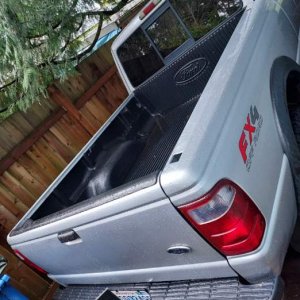
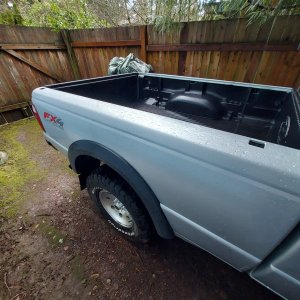
Used Valvoline Restore & Protect the last few oil changes in the Ecobeast Ranger. Used mostly Valvoline Synthetic before.
I figure it will help with the turbo and turbo oil screens. An FL-400S filter is bigger and fits right on in place of the FL-910S. I use the Mobil 1 equivalent.
 
Last edited:


Agressive flat tappet application.
 
he is coolz.

met him a few times and his packaging of rings for several projects with companies in detroit area is based on oils and formulation combined with ring tension and fuel types.

rotella does work well with many gasoline applications...the diesel oil...not the gasoline oil ...this is assumed why it is mentioned...

and certain additives do work well once an engine is damaged and well worn and on the way out.

based on the last 3 years testing and reporting and current 500k reporting capacity with the ecoboost engines...i am on the restore and protect train.

always a valvoline fan for my gas engines. but i ran supertech in my pushrod engines because of lakes testing specifically....once he tests a walmart version...if ever there is a walmart version...mobile 1 is offering it now...so who knows..but if they do make a version of protect and restores and lake speed clears it, i will probably go to that if cost structure is the same as current...because it is a significant savings.


but i do build engines to run with rotella or 20/50 in regards to ring package and bearing type/tolerences. that is a thing too.
Glad to hear he's a good guy in person too, that's how he comes off on screen. And aside from his professional credentials, I'm sure growing up in a NASCAR pit stall would give you more hands-on wear and tear experience than most guys will ever get.

Yeah I should have been clearer about Rotella, I was referring to the diesel - I forget sometimes they even make a gas formulation as I don't see it around these parts very often.

I've switched all but one of my fleet to Supertech synthetic too after seeing his testing and Project Farm's. For the way my cars get used, which is low mileage and lots of sitting, I can't justify paying nearly twice as much for "brand name" oil.
 
The Valvoline team tore down 500K engines running conventional oil, then ran Restore and Protect in one. The oil analysis of four changes was interesting.

 
I've switched all but one of my fleet to Supertech synthetic too after seeing his testing and Project Farm's. For the way my cars get used, which is low mileage and lots of sitting, I can't justify paying nearly twice as much for "brand name" oil.
I'm interested. Is the quality the same?
 
The Valvoline team tore down 500K engines running conventional oil, then ran Restore and Protect in one. The oil analysis of four changes was interesting.

I was referring to this. He waited till they dropped the data
 
I was referring to this. He waited till they dropped the data
Several things I liked with that oil. It cleans the rings out. That was indicated not only visually, but that the level of fuel in the oil diminished with every change. I also liked that the oil filter media lacked chunks or debris showing a slow disolving. I've switched my vehicles over to it. I took the valve cover off the 94 Ranger a while back and there was a good coating of varnish. I'm hoping oil consumption will decrease if the rings are stuck and get freed up.
 
I'm interested. Is the quality the same?
Yes, Walmart Supertech has always tested very well in all the studies I've seen. IIRC it's Warren Oil that makes the it, and they used to make Amazon branded oil too, although I can't say if that's still true. Basically, Lake Jr. says that the recent API specs, whether SP or SQ, are extremely good at wear protection.
 
The Valvoline team tore down 500K engines running conventional oil, then ran Restore and Protect in one. The oil analysis of four changes was interesting.


As a believer in the scientific method, I'd try to vet that info with another source or two, but that's why I really like his videos: if you want to nerd out on oil, he lays out the data.

@9:40 "don't use oil additives, just use good oil"

Key info for owners of newer Fords - SP and SQ are compatible with wet belt chemistry. Additives, you never know.

edit: re vetting the data - probably going go to be very difficult to do as almost nobody knows enough or has a resources to properly test that stuff, which is another reason his channel is so valuable
 
As a believer in the scientific method, I'd try to vet that info with another source or two, but that's why I really like his videos: if you want to nerd out on oil, he lays out the data.

@9:40 "don't use oil additives, just use good oil"

Key info for owners of newer Fords - SP and SQ are compatible with wet belt chemistry. Additives, you never know.

edit: re vetting the data - probably going go to be very difficult to do as almost nobody knows enough or has a resources to properly test that stuff, which is another reason his channel is so valuable


so... great point. he defends the indefensible.

i diverge 100 percent there.

wet belts. absolute retardation. like egr......having egr and wetbelts is double triple retarded....this is a drown the entire food chain of thought from epa to whomever signed off on the manufacturing side emergency....

there is no reason ever to use a belt that requires a chemistry which actively changes with unintended and unknowable conditions of the combustion process.....or is it? i think it is intended. they count on the corruption of the oil to shorten the life due to the average user model... getting the oil out of state is even easier because our fuel quality is shit. on a great day.

this is subject directly to availability.

i work nationwide with a varied fleet of vehicles. you can not be promised a specific magical oil when the need arises. just getting to a safe place to rest with regular 30 wt will destroy a perfectly functioning engine in short order for no reason at all to exist.

in the context of cradle to grave...


this is a crime against humanity. there is no mpg gain or emission improvement that can justify such idiocy. making an engine subject to failure with one slight addition of a quart of oil....no.

fleet wise....in the most abusive environment you can have....roughnecks driving your pickups...we still expected 250-350 k out of an engine.

0 weight oil showed up.

engine failures increased on a magnitude. on the ram side it is approaching 75 percent have a failure before 120k.


then in the world...

most of the 4cyl ecoboost fails are due to oil situations....these engines are underrated and awesome....weakening them like this is just criminally stupid.

make oil simple.

if you use less.....YOU USE LESS. that is always good for the environment.
 

Sponsored Ad

TRS Events & Gatherings

Featured Rangers

Want to see your truck here? Share your photos and details in the forum.

TRS Latest Video

Official TRS Merchandise

Follow TRS On Instagram

TRS Ranger Sponsors


Product Suggestions

Back
Top