
- Joined
- Oct 1, 2021
- Messages
- 5,210
- Points
- 101
- State - Country
- TX - USA
- Other
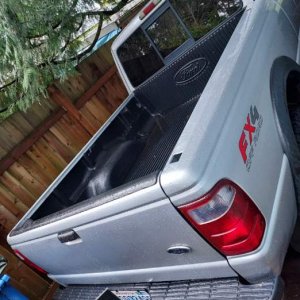
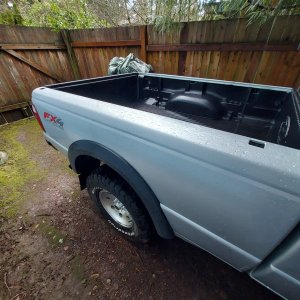
- 2004 ford ranger
- Vehicle Year
- 2024
- Vehicle
- Ford Ranger
- Drive
- 2WD
- Engine
- 2.3 EcoBoost
- Transmission
- Automatic
- Total Lift
- 0
- Total Drop
- 0
- Tire Size
- Stock
- My credo
- drives a stick shift ranger
I heard that the 19-23 5th gen shackle lifts work on the 2024 and newer rangers so i figured i would try it out.
This is the kit pn you need:

It doesn't come with bushing grease so make sure you have some before you pull everything apart. I have tons of packets from all the lift kits and lowering kits i have installed over the years but you can buy small packets like i have at your local autopart store. They are normally near the register
My 24 ranger sits dead level since i put a 2.5" leveling kit (spacer) on the front and i don't like it, i want a little rake in case i have to tow.
the wife got me a bds 1" rear shackle kit for my birthday, tuesday, from amazon.
It turns out that if a person was so inclined, you could probably change the shackles in half an hour. i am not that worried about it so i drug it out and took pictures and stood in front of the heater because its 45 degrees and windy.
It looks great and the shackles are plenty solid, like one would expect. They are indeed angled exactly like the 6th gen ranger rear shackle and the hardware fits perfectly. This is good because its giving more options for mods for people down the road.
Here are the shackles laid out with the hardware and instructions. They are well packaged and the instructions, though generic, give you basic steps and importantly, the torques at the end.

This is the hitch on the stock shackles. I figured this is a great refetence point since its easy to measure from.

When you lay under the back, you will immediately notice the spare makes it impossible to remove the driver side shackle so go ahead and lower the down. While you are there, check the air pressure on it since its accesible. Its also a good time to clean and grease your spare hoist if you need to.

The stock nuts on the stock shackles are not very tight. I was surprised. I think i used a 3/4 socket snd extendable ratchet to loosen the nut but you can do it with a normal ratchet. If you play with the jack, you can find where the height lets you easily tap the captured bolt assembly out with ease and maybe you cam just push it, if you get it super close so there is no tension.


Here is the bds and the stock so you can see the difference. The stock has one thin side with the bolts welded to it so they are not going to spin when you loosen the nuts. The side with the welds is bent smd shaped to add stregth to the metal while keeping weight down. A common manufacturing process used in aviation and later in automotive parts.

Install the longest siver tubes in the frame bushings, one on each side. Put some bushing grease on them and just slide them in. If they try to push the oppsite side bushing out, while installing, jist put your hand over the bushing and push back amd you will get everything together. As it gets to the last quarter inch, it will get tough so you can tap it in with a rubber mallet, use a long bolt, washers, and nut to pull it together, or even a large pair of pliers with the washer will do it. But, also jist slowly squeezing it between your hands does it too, just a lot slower.
Then put your shackle and long bolt, washers, and nut in place to start assembly

From here in out, its easy and basically jist reverse of removal except you also need to put the tube into the leaf spring bushings. That part is super easy and you just grease it and slide it into the bushings as it wont try and push the other side out. After the tube is in, you will fiddle with the jack a little to lift yhe truck a bit and put the smaller bolts in place, along with the third tube. Yoi will have to use one hand to push the leaff spring up to perfectly align the bolt hole to get the small bolt through everything but its super easy. After bolts are in, you tighten the nuts to get the play out and lower the truck down so its not suspended off the leaf springs anymore.

Here, you do the inital torqueing to 52 foot pounds on all 6 bolts. Of course, you torque the nut and hold the bolt head, both use 3/4" tools.
Sfyer your initial torque, ypu are supposed to jump on the bed or bumper to settle the suspension. I drove the half mile down to the ocean and back because the city doesn't maintain the road that well and it works the suspension way more then i could by jumping on the bumper or bed.

after setrling the suspension, you need to go back under and do your final torque to 76 foot pounds.
Here is the hitch height after the final torque showing i got, basically, 1.5 inches of lift with the shackle install.

I am sure it will settle a little more over time. If i remember, i will measure at the 500 mile recheck of the hardware torque that the instructions say to do.

And now you done with your install. The truck looks great and the parts are very well made.
This is the kit pn you need:
It doesn't come with bushing grease so make sure you have some before you pull everything apart. I have tons of packets from all the lift kits and lowering kits i have installed over the years but you can buy small packets like i have at your local autopart store. They are normally near the register
My 24 ranger sits dead level since i put a 2.5" leveling kit (spacer) on the front and i don't like it, i want a little rake in case i have to tow.
the wife got me a bds 1" rear shackle kit for my birthday, tuesday, from amazon.
It turns out that if a person was so inclined, you could probably change the shackles in half an hour. i am not that worried about it so i drug it out and took pictures and stood in front of the heater because its 45 degrees and windy.
It looks great and the shackles are plenty solid, like one would expect. They are indeed angled exactly like the 6th gen ranger rear shackle and the hardware fits perfectly. This is good because its giving more options for mods for people down the road.
Here are the shackles laid out with the hardware and instructions. They are well packaged and the instructions, though generic, give you basic steps and importantly, the torques at the end.
This is the hitch on the stock shackles. I figured this is a great refetence point since its easy to measure from.
When you lay under the back, you will immediately notice the spare makes it impossible to remove the driver side shackle so go ahead and lower the down. While you are there, check the air pressure on it since its accesible. Its also a good time to clean and grease your spare hoist if you need to.
The stock nuts on the stock shackles are not very tight. I was surprised. I think i used a 3/4 socket snd extendable ratchet to loosen the nut but you can do it with a normal ratchet. If you play with the jack, you can find where the height lets you easily tap the captured bolt assembly out with ease and maybe you cam just push it, if you get it super close so there is no tension.
Here is the bds and the stock so you can see the difference. The stock has one thin side with the bolts welded to it so they are not going to spin when you loosen the nuts. The side with the welds is bent smd shaped to add stregth to the metal while keeping weight down. A common manufacturing process used in aviation and later in automotive parts.
Install the longest siver tubes in the frame bushings, one on each side. Put some bushing grease on them and just slide them in. If they try to push the oppsite side bushing out, while installing, jist put your hand over the bushing and push back amd you will get everything together. As it gets to the last quarter inch, it will get tough so you can tap it in with a rubber mallet, use a long bolt, washers, and nut to pull it together, or even a large pair of pliers with the washer will do it. But, also jist slowly squeezing it between your hands does it too, just a lot slower.
Then put your shackle and long bolt, washers, and nut in place to start assembly
From here in out, its easy and basically jist reverse of removal except you also need to put the tube into the leaf spring bushings. That part is super easy and you just grease it and slide it into the bushings as it wont try and push the other side out. After the tube is in, you will fiddle with the jack a little to lift yhe truck a bit and put the smaller bolts in place, along with the third tube. Yoi will have to use one hand to push the leaff spring up to perfectly align the bolt hole to get the small bolt through everything but its super easy. After bolts are in, you tighten the nuts to get the play out and lower the truck down so its not suspended off the leaf springs anymore.
Here, you do the inital torqueing to 52 foot pounds on all 6 bolts. Of course, you torque the nut and hold the bolt head, both use 3/4" tools.
Sfyer your initial torque, ypu are supposed to jump on the bed or bumper to settle the suspension. I drove the half mile down to the ocean and back because the city doesn't maintain the road that well and it works the suspension way more then i could by jumping on the bumper or bed.
after setrling the suspension, you need to go back under and do your final torque to 76 foot pounds.
Here is the hitch height after the final torque showing i got, basically, 1.5 inches of lift with the shackle install.
I am sure it will settle a little more over time. If i remember, i will measure at the 500 mile recheck of the hardware torque that the instructions say to do.
And now you done with your install. The truck looks great and the parts are very well made.
Last edited: