Weird voltages read from ignition switch


Se7enth Sol

Forum Member

Firefighter
Joined
Nov 28, 2021
Messages
13
Points
101
City
New Jersey
Vehicle Year
1990
Engine
4.0 V6
Transmission
Manual
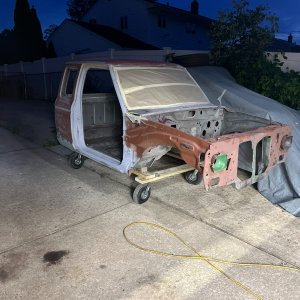
Hi all, I'm working on an engine swap in my 1990 B2. I just replaced the main power relay with an aftermarket one (cut off the old one and spliced in the new one). However, when I turn the key to "run" the relay closes its contacts as it should, but when I set the key to "off" and take out the key the relay does not go back, it stays active. I have to disconnect the battery to reset the relay. I have found that the red wire with a light green stripe going to the relay coil from the ignition switch has a steady 3.41V. So I'm guessing the 3.41V is not enough to trigger the coil but enough to keep the contacts closed after it has been switched.

My main question is, is the constant 3.41V on this circuit supposed to be there? Also, where could it be coming from? I'm kind of stumped here on my project until I get this relay to operate properly.

Also, Upon investigation into the ignition switch there are many different wires with odd voltages when the key is off. So if someone could shed some light whether these are proper voltage readings I would be much appreciative.

I've attached photos and diagrams below. Thanks again for your help!

Weird voltages read from ignition switch
 
Is your relay sticking when the engine is running? If so, the stray voltage may be coming from the exciter wire to the alternator. You can unplug this wire and try it. It will not charge with this wire unplugged, but you can see if it is where the voltage is coming from.

If it turns out to be the problem, you need to separate the alternator wire from the ignition wire that feeds the relay coil. That is why the factory has so many sections to the original ignition switches. If you tie things together to one big switch, circuits tend to feedback. But if you have multiple contacts or poles on your switch, then when you turn the switch off the various circuits are now disconnected and can't feedback to one another.
 
Is your relay sticking when the engine is running? If so, the stray voltage may be coming from the exciter wire to the alternator. You can unplug this wire and try it. It will not charge with this wire unplugged, but you can see if it is where the voltage is coming from.

If it turns out to be the problem, you need to separate the alternator wire from the ignition wire that feeds the relay coil. That is why the factory has so many sections to the original ignition switches. If you tie things together to one big switch, circuits tend to feedback. But if you have multiple contacts or poles on your switch, then when you turn the switch off the various circuits are now disconnected and can't feedback to one another.


Haven't had the first start up on my engine yet. Also, there is no alternator wired in yet so its curious where the low voltage comes from. What else could generate a voltage? Capacitor? small battery somewhere?
 
A poor ground somewhere can cause it. Poor grounds cause all sorts of problems. The only way to logically find out what is causing it is to disconnect things one at a time till the voltage goes away. You can usually use the fuses for this, disconnecting parts of the electrical system till the voltage goes away.
 
A poor ground somewhere can cause it. Poor grounds cause all sorts of problems. The only way to logically find out what is causing it is to disconnect things one at a time till the voltage goes away. You can usually use the fuses for this, disconnecting parts of the electrical system till the voltage goes away.

Good idea. I'll see which fuses affect the voltages in the ignition. Was trying to trace the wires back but that was getting difficult.
 
A poor ground somewhere can cause it. Poor grounds cause all sorts of problems. The only way to logically find out what is causing it is to disconnect things one at a time till the voltage goes away. You can usually use the fuses for this, disconnecting parts of the electrical system till the voltage goes away.


The 40A headlamp fuse is the one responsible for letting the 3.41V pass through. Not sure how the head lamps are tied to the main power relay.
 
Ist thing to do, make sure you have your large ground hooked up from the battery negative to the engine block, and then make sure you have a smaller ground going from the back of the engine block to the firewall to ground the cab. This is an important ground that is frequently left off during a engine swap or replacement.
 
make sure you have a smaller ground going from the back of the engine block to the firewall to ground the cab. This is an important ground that is frequently left off during a engine swap or replacement.

You hit the nail right on the head. While I didn't forget to wire this ground up, I cleaned up those contacts with a wire wheel and now my ignition works like a charm. Thanks for the tip!
 

Sponsored Ad

TRS Events & Gatherings

Latest posts

Featured Rangers

Want to see your truck here? Share your photos and details in the forum.

TRS Latest Video

Official TRS Merchandise

Follow TRS On Instagram

TRS Ranger Sponsors


Product Suggestions

Back
Top