The extreme version of an adapter is DRW trucks which run 4" adapters on fronts - which when using a dually rim puts the tire centerline back in exactly the same location as the SRW. So, if OEM engineers do it, it can't be all bad, but note they use cast iron for the adapter. They also moved to "wide axles" which gained them bonus of being able to turn the wheels sharper which buys back some turning radius (not that an F-450 SCrew long box is ever going to have great turning radius.)
@cbxer55's adapters are in theory better than
@Zmans as they are machined with lip to ensure the rim is mounted concentric to the spacer.
The theoretical minimum thickness for an adapter is 1" assuming 1/2" studs - that allows for 1 stud diameter of material inside the lug nut + 1 stud diameter of thread engagement. In practice 30mm is minimum to ensure for manufacturing tolerances and the hub studs will be below the surface of the adapter.
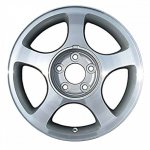
Ranger rims vary between 6 and 12mm offset depending on wheel width and year. The OPs Mustang rims have a 30mm offset. 30-6=24mm, so if using 1" adapters, the tire center would be within 1.4mm of where the Ford engineer designed for....close enough for practical purposes. 30-12=18, if using 30mm adapters, the tire center will be 1/2" wider than ideal, but only 1/4" outside of outer OEM limits. The axle limit would be reduced a little, so you would need to compare the reduction as a result of spacer versus the ultimate limit.
For rear wheels, I know the flange to axle bearing for stock was 2-3/8" (this is very standard distance for Fords). And I know the 28 spline axle limit is 2,700lbs. Quick back of napkin calculation (2.375+0.25)/2.375*2700 = 2,440lbs. But as my Ranger is a Splash the rear GAWR is only 2,400lb (springs are limiting factor), so I should be safe unless I overload the truck which I would never do.

For the
@cbxer55's Lightning, he doesn't get the benefit of increased offset because he has made his wheels wider the exact same amount. So, with his 1.5" adapters, he had increased the bearing edge to wheel centerline from 2-3/8" to 3-7/8", which increased load on axle bearing. But then he probably doesn't load his Lightning up with camper or tow a 5th wheel, so he just needs to be aware of limit he has created on his truck.
Actual worst case for cbxer55 is when he is carving down the back road on way home and comes around corner, only to find a 4x4 lying on road. And he almost misses it, but just catches it on the outside edge of his wider than stock tires. Then the poor axle is fighting both the spacer and wider/heavier wheel. And people blame the spacer for the failure.
An adapter moving the load on bearing outboard has kept me from building dually Ranger - the thought of hitting something on road with the outboard tire wouldn't be good for the poor 28 spline axle.