
Introduction
Some 4×4 enthusiasts modify their suspensions and use coil springs from a 1966–1977 Ford Bronco. One of the challenges is mounting the coil to the Dana 35 TTB axle beam. In this guide, we’ll show you step-by-step how to make it work safely while using heavy-duty cups.
Step 1: Understanding Coil Mount Differences
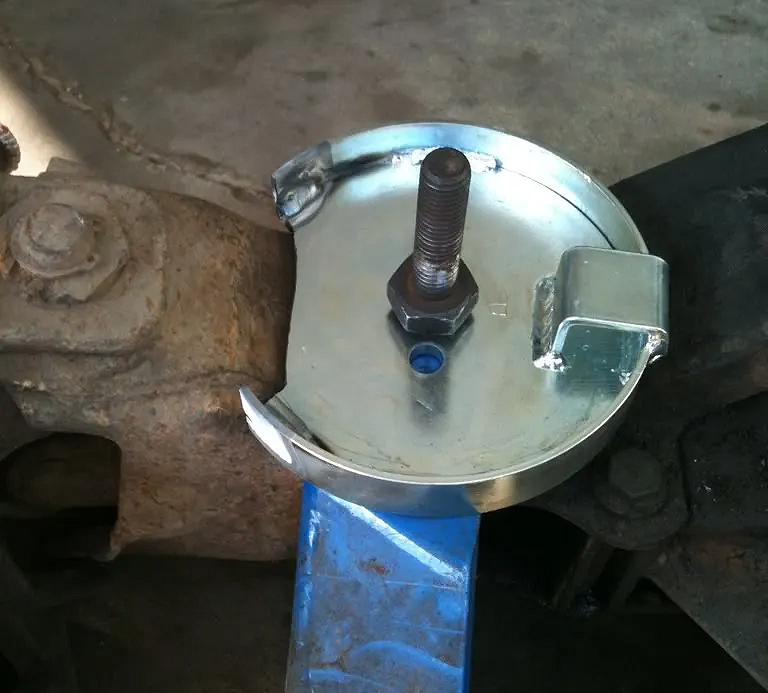
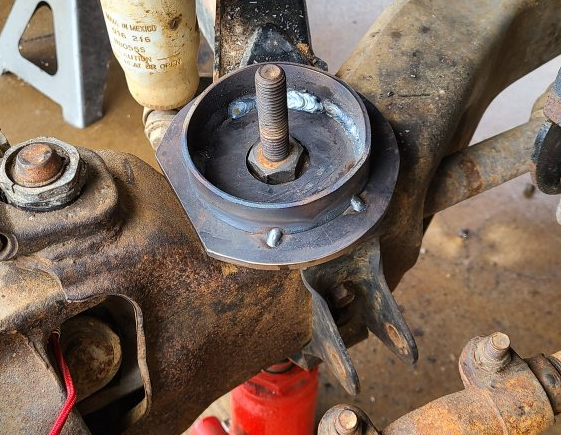
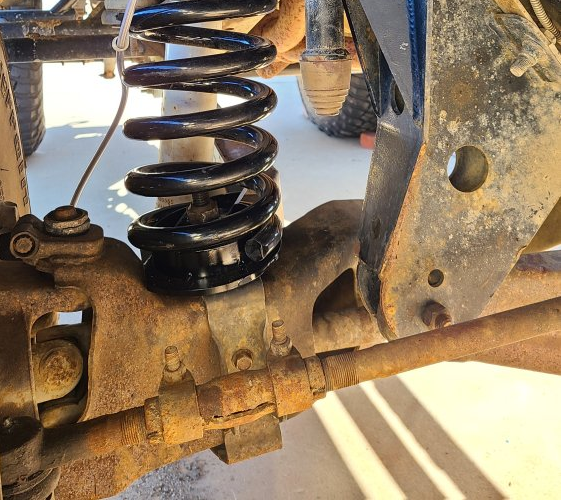
The Ranger coil is sandwiched between a coil seat and a dish-shaped washer held in place by a nut on the center mounting stud. The Ford Bronco coil sits inside a cup and slides into the square hoop, as seen in the photo below. To mount it on the Dana 35, the original coil spring mounting stud is removed and the Bronco lower mounting cup is secured. A hole must be drilled in the center of the cup for the stud to fit through.
Step 2: Using Heavy-Duty Lower Coil Cups
Heavy-duty lower spring cups are available for extreme-duty setups. The photo below shows one of these cups. A hole is drilled into the center to mount it on the Dana 35 axle, and the cup is cut to fit around the steering knuckle where it mounts.
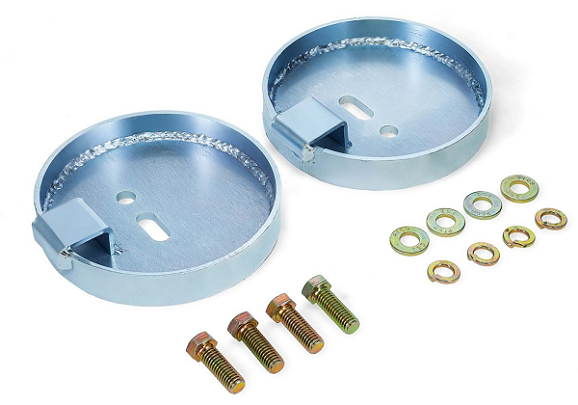
(Extreme Duty Lower Coil Spring Cups, 66-77 Ford Bronco)
Step 3: Custom Mounting Options
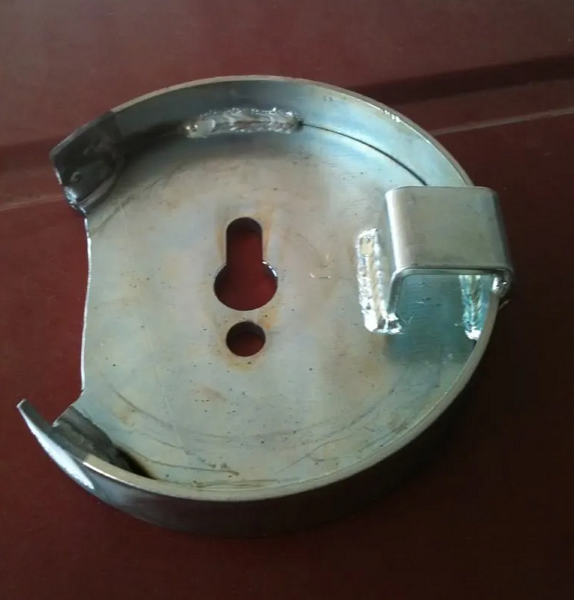
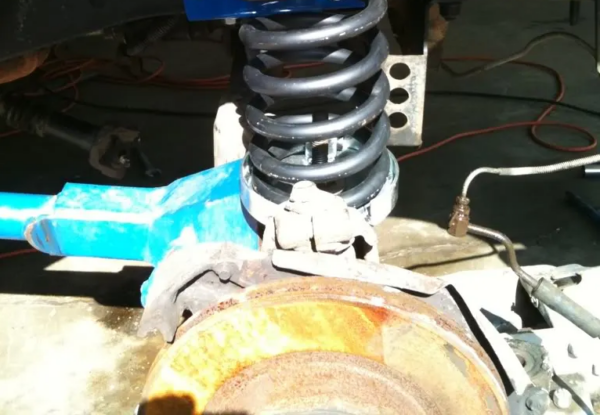
Some users fabricate their own mounting cups. In this setup, the coil sits around the mount, and the Ranger’s original dished cup can be reused to tighten against the ring on the cup.
Step 4: Comparison With Dana 44
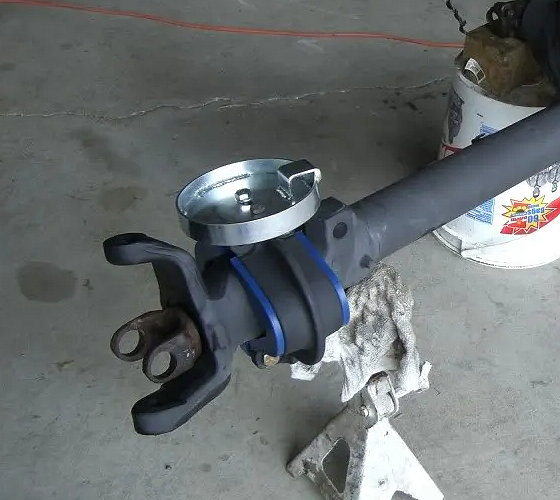
This is what the Bronco mounting cups look like when installed on a Dana 44 axle.
Tips and Notes
- Ensure all holes are properly aligned before tightening the coil cups.
- Check coil alignment with steering knuckle clearance.
- Use heavy-duty lower cups for extreme-duty setups.
- Double-check all bolts and torque specs before driving.
Related Articles
- 1983–1997 Ford Ranger Coil Spring Guide
- Swapping From 4″ to 6″ Coils
- Mounting Early Bronco Springs To Your Dana 35
- Maximum Flex For The TTB With Jeep Coils
- F-150 Coils For Your V8 Ranger
- Various Coil Spring Rates
Frequently Asked Questions
Can I use early Bronco coils on a stock Dana 35 TTB?
Yes, but you need to drill and modify the lower coil cups to fit the Dana 35 mounting studs safely.
Do I need special tools for the installation?
A drill, wrenches, and heavy-duty lower cups are recommended for proper mounting.
Will this fit on a Dana 44 axle?
Yes, the early Bronco cups can also be mounted on a Dana 44, but the installation may differ slightly.
About The Author
Jim Oaks is the founder of TheRangerStation.com, the longest-running Ford Ranger resource online since 1999. With over 25 years of hands-on experience building and modifying Ford Rangers — including magazine-featured builds like Project Transformer — Jim has become one of the most trusted authorities in the Ford Ranger off-road and enthusiast space.
Since launching TheRangerStation.com, Jim has documented thousands of real-world Ranger builds, technical repairs, drivetrain swaps, suspension modifications, and off-road adventures contributed by owners worldwide. TheRangerStation.com has been referenced in print, video and online by enthusiasts, mechanics, and off-road builders looking for practical, and experience-based information.