
Introduction:
This article discusses how to install leveling coils on a 1983-1997 Ford Ranger 4×4. Leveling coil installation isn’t extremely difficult, as long as you have access to the proper tools and equipment.

(Leveling Coil Left – Stock Coil Right)
Tools I Used:
- 1/2″ Air Impact Wrench
- 1/2″ Rachet & Breaker Bar
- 1/2″ Metric & Standard Sockets
- 18mm & 1-1/8″ Wrenches
- 8″ & 12″ Adjustable Wrenches
- Coil Spring Compressor
- (2) 2-Ton Floor Jacks
- (2) 3-Ton Jack Stands
- (1) Can of PB Blaster.
First off, I jacked up the truck by the axles and placed both jackstands to hold the frame rails by the radius arm crossmember.
Next, I lowered the jacks to float out the suspension and removed the bolt holding the swaybar to the axle and also unfastened the shocks from their upper mounting spots, which allowed for full drop of the axles.
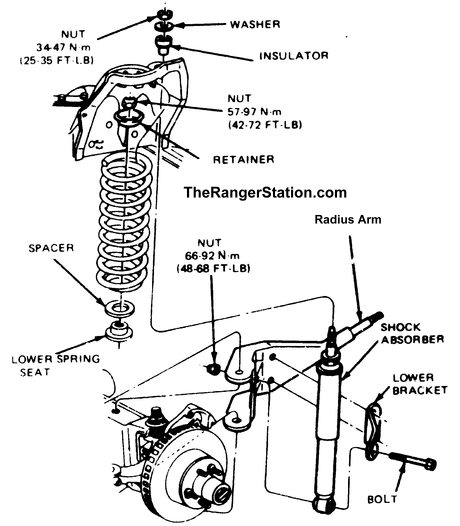
Next, I removed the nut that holds the coil to its perches, using the 1-1/8″ wrench & a good bit of PB Blaster (this step make take a while)
Next, I used the spring compressor to remove the stock coil (this may or may not be necessary, depending on how much drop of the axles is present). At this point I decided to take some time to clean up and repaint the parts that hold the coils in, to help keep rusting to a minimum. After the paint had dried, I continued with installing the leveling coil.
I placed the coil over the stud, then moved the coil into its seat, while keeping pressure on the 4×4 hub (this allowed for installation without the spring compressor).
Once the coil was in its seat, I placed the jack under the axle and lifted the axle till it was setting about level. Then I put the beveled washer, and nut back on the stud, and tightened it down, reconnected the swaybar, and upper mount of the shock. (if reusing the stock shocks, use a shock extension stud, available at most auto parts stores, to prevent shock damage).
Repeat same procedure for other side. Pictures of the truck were taken after installation.
From Jim Oaks:
Some people think that you need a coil spring compressor to get the coils out. You don’t.
When I remove the front coils, I follow these steps:
1. Jack up the truck
2. Support the frame with jack stands
3. Remove the wheels
4. Remove the nut from the upper shock stem (this will let the shock slide down and out of the mount in a later step)
5. Remove the brake caliper (need a 18mm wrench or socket) and support it so it’s not hanging by the brake hose (I remove it, so I don’t overextend the brake line pushing the axle down to get the spring out.
6. If you truck has a sway bar – disconnect it.
7. Then I push down on either the hub or rotor with my foot until the spring pops out of the upper coil bucket. The coil is held on to the front axle with a nut and retainer, so it won’t come shooting out at you. The shock will also come down out of the mount and let the axle travel down enough for the spring to come out.
8. Then I use a deep 1-1/8-inch socket, extension, work the breaker bar through the coils onto the socket, slide a long metal pipe over the breaker bar for leverage, and remove the retaining nut.
When Installing:
1. Install the new spring, retainer and tighten the nut (75-100 lb-ft)
2. Jack the axle back up so the coil goes back up into the upper coil bucket
3. Note that the upper bucket has an indentation that the end of the coil spring wire sits in to.
4. Make sure the coil goes up over the tabs in the upper bucket.
5. Reconnect the sway bar.
6. Reinstall the shocks, brakes, and wheels.
Special Thanks To:
Rick Wilds (Mud_Buggy) for sharing his experience install a pair of leveling coils.
Related Articles:
1983-1997 Ford Ranger 4×4 Coil Spring Guide
About The Author
Jim Oaks is the founder of TheRangerStation.com, the longest-running Ford Ranger resource online since 1999. With over 25 years of hands-on experience building and modifying Ford Rangers — including magazine-featured builds like Project Transformer — Jim has become one of the most trusted authorities in the Ford Ranger off-road and enthusiast space.
Since launching TheRangerStation.com, Jim has documented thousands of real-world Ranger builds, technical repairs, drivetrain swaps, suspension modifications, and off-road adventures contributed by owners worldwide. TheRangerStation.com has been referenced in print, video and online by enthusiasts, mechanics, and off-road builders looking for practical, and experience-based information.