
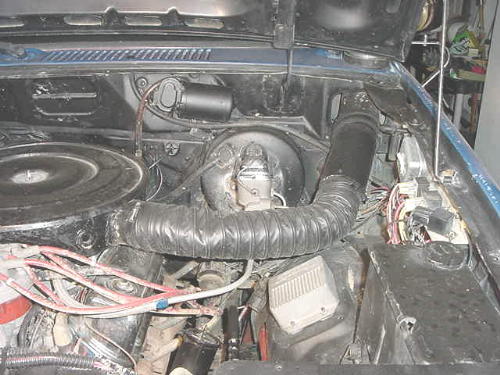
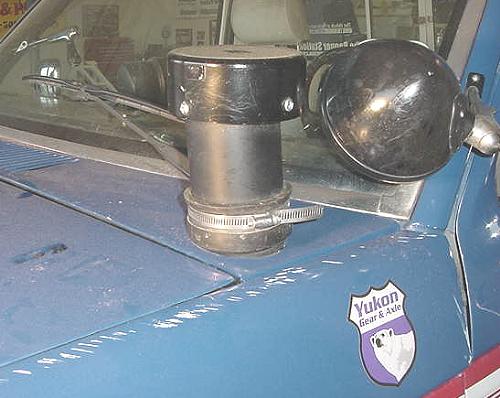
Here are two photos of the snorkel used on my Ranger. The snorkel is used on my 302cid V-8 and 4bbl Holley Avenger carburetor. To build the snorkel you need the following items:
Minimum 3-inch diameter PVC pipe. Get at least 2 feet.
-
(1) 45 degree rubber elbow for 3-inch PVC
-
(1) PVC end cap larger than the 3-inch pipe (or other cover)
-
3-Inch exhaust tube
-
Flexible intake hose of dryer hose to fit the pipe
I used a stock 4bbl air cleaner and removed the inlet tube. I patched the hole, cut a new one on the drivers side and welded on a piece of 3-inch exhaust tube.
I cut a hole on the cowl panel on the drivers side close to the access cover on the firewall. I removed the cover and ran the flexible rubber elbow through the cowl and in to the engine compartment through the access hole. I attached a section of 3-inch PVC pipe on each end and secured it with clamps. I now had a stack going up from the cowl and a tube going in to the engine compartment.
I could only find flexible hose large enough to fit 3-inch exhaust tubing. So I slid a section of exhaust tubing in to the engine compartment end of the PVC pipe and secured it. I then connected this tube to the tube I welded on to the air cleaner.
I used a large PVC cap and drilled 4 holes around the outside edge. I then drilled matching holes in the PVC pipe sticking up from the cowl and secured the cap to the pipe. The cap DOES NOT sit on top of the pipe and block access. I sits above the pipe and allows air to come in around the sides of the pipe and through the top. The cap serves to prevent water and debris from going down in to the pipe.
About The Author
Jim Oaks is the founder of TheRangerStation.com, the longest-running Ford Ranger resource online since 1999. With over 25 years of hands-on experience building and modifying Ford Rangers — including magazine-featured builds like Project Transformer — Jim has become one of the most trusted authorities in the Ford Ranger off-road and enthusiast space.
Since launching TheRangerStation.com, Jim has documented thousands of real-world Ranger builds, technical repairs, drivetrain swaps, suspension modifications, and off-road adventures contributed by owners worldwide. TheRangerStation.com has been referenced in print, video and online by enthusiasts, mechanics, and off-road builders looking for practical, and experience-based information.