Evaporator coil remove/repair need video


moretsky99

Forum Member

Joined
Jun 1, 2025
Messages
60
Points
101
Age
76
City
Pensacola area of Florida
State - Country
FL - USA
Vehicle Year
1996
Vehicle
Ford Ranger
Drive
2WD
Engine
2.3 (4 Cylinder)
Transmission
Manual
Tire Size
14"
Had a fire under the evaporator coil and mulling my options. My air conditioning was not working and will not be missed if I remove it all.
For sure I need to clean out underneath that area as that's where the fire was.
For months I had been hearing a slight rubbing noise when putting on the heater fan, still not sure if this is connected to this issue.

During the fire, I jimmied the plastic around the evaporator coil. That plastic is ruined on the passenger side from melting. I'm still not sure, but might have poked a hole in the coil as well when I was using the only tool available, a crowbar to get at the area to douse with water.

Can anyone point to a video or .... as to my options here including complete removal of the coil and whatever else would have to be removed.

Thanks,
Just looking for a little direction.
 
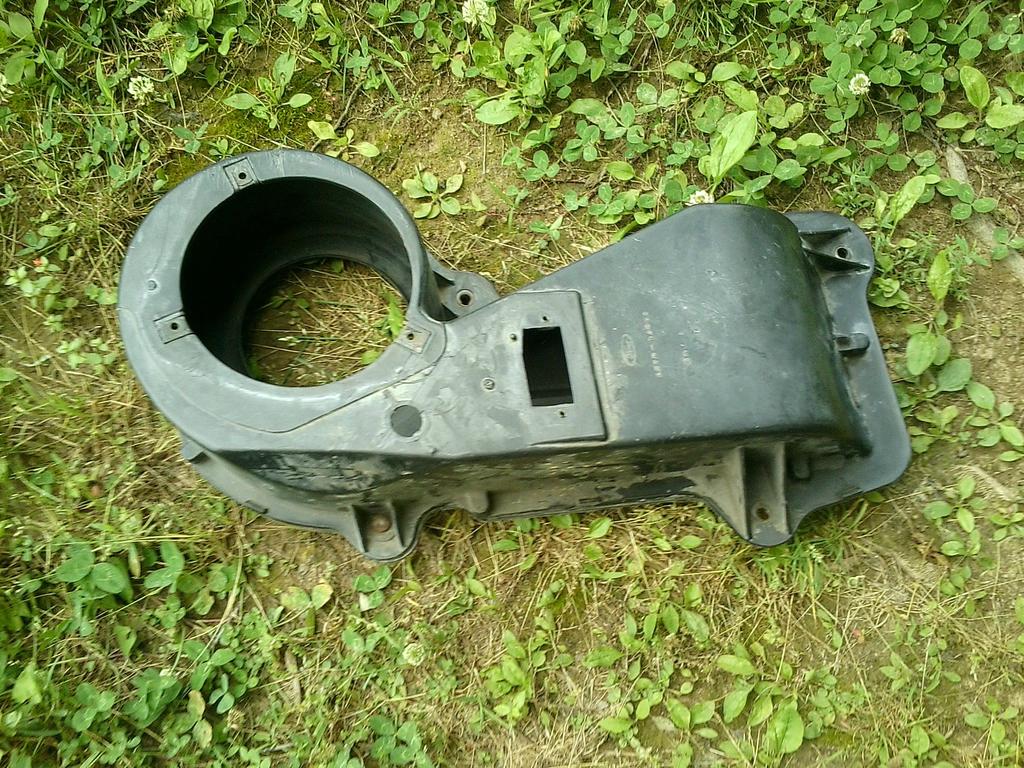
If the 96 has the same AC/Heater box as earlier trucks, you could try to find one of these:

Evaporator coil remove/repair need video


It's the outside portion of that box. Depending on how much damage there is, I'd probably cut up an old license plate or something to rivet over the holes. (A detergent bottle would probably work fine.)

Post up a couple pictures of what you're working with and we can advise further.
 
If the 96 has the same AC/Heater box as earlier trucks, you could try to find one of these:

Evaporator coil remove/repair need video


It's the outside portion of that box. Depending on how much damage there is, I'd probably cut up an old license plate or something to rivet over the holes. (A detergent bottle would probably work fine.)

Post up a couple pictures of what you're working with and we can advise further.
Great timing. Just in from the garage where I was trying to remove the other side of this piece. I decided to just get rid of all the aircon parts. So this part will stay. I already removed the blower, but the dirt or whatever burned was not in the cavity. I think I'll have to remove the evaporator to get at the dirt underneath it. I'm confused about the water to the evaporator. From videos I've watched there's a separate radiator for the aircon. Is there a connect to the main radiator that I need to plug if I remove that aircon radiator? Another question, will I have to get a new belt if I remove the aircon pump or with the tensioner be able to make up the slack?
Thanks for the photo. An inspiration to try my hand at the same. Hope it looks OK. Here's the damage. Fire seemed to come from under the evaporator. I think I damaged the evaporator and so might as well get rid of it as I never use the aircon which didn't work anyhow.
Evaporator coil remove/repair need video
 
There is no water to the evaporator coil. It receives refrigerant from the compressor on the front of the engine. However, there is also a heating coil in the ductwork to provide heat when you need it. It gets its heat from the engine coolant - 2 hoses, one supply and one return.

Removal of what you are looking at isn't complicated. It's just difficult to get your hands in some of the places to remove the fasteners. If you have a 4-cylinder engine, you have the easiest access out of anybody. The plastic housing is in 2 halves and the separation runs along the centerline of the evaporator coil.

If you are interested, I have a housing available from a 1996 Explorer that I am parting out. To my knowledge, it should be the exact replacement you need. Not trying to sway your decisions. Let me know here or in private message if you are interested. Basically, almost any of the parts in that area that you need are available. If you want these parts, I will video the removal process as I perform it. You can also go to local junk yards to get these parts.

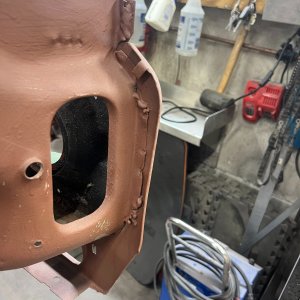
The whole housing as it should look.
20260509_193244.jpg


These 2 hoses bring coolant to the heater coil.
20260509_193251.jpg


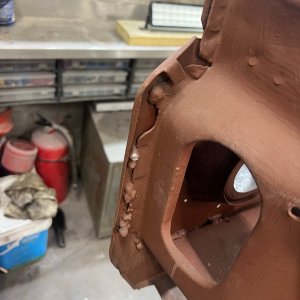
Your evaporator coil lives inside this part. Note the large refrigerant connection at the top and a slightly smaller metal refrigerant pipe at the bottom near the top shock mount.
20260509_193257.jpg


Rectangular hole is where the blower fan resistor assembly lives. The small round hole should have a flexible rubber hose that helps cool the blower motor.
20260509_193307.jpg
 
Last edited:
None of the AC connects directly to the engine cooling radiator. At least not on anything I've ever seen before.

You would need a new belt or an idler if you remove the compressor. Since it'll never engage, it's really just acting as an idler if everything else is gone anyway. I'd disconnect the clutch wire and let it hang out till it gave problems or I needed to replace the belt anyway. It can be modified to work as a way to air up tires if you're ambitious enough.
 
There is no water to the evaporator coil. It receives refrigerant from the compressor on the front of the engine. However, there is also a heating coil in the ductwork to provide heat when you need it. It gets its heat from the engine coolant - 2 hoses, one supply and one return.

Removal of what you are looking at isn't complicated. It's just difficult to get your hands in some of the places to remove the fasteners. If you have a 4-cylinder engine, you have the easiest access out of anybody. The plastic housing is in 2 halves and the separation runs along the centerline of the evaporator coil.

If you are interested, I have a housing available from a 1996 Explorer that I am parting out. To my knowledge, it should be the exact replacement you need. Not trying to sway your decisions. Let me know here or in private message if you are interested. Basically, almost any of the parts in that area that you need are available. If you want these parts, I will video the removal process as I perform it. You can also go to local junk yards to get these parts.

The whole housing as it should look.
View attachment 142535

These 2 hoses bring coolant to the heater coil.
View attachment 142536

Your evaporator coil lives inside this part. Note the large refrigerant connection at the top and a slightly smaller metal refrigerant pipe at the bottom near the top shock mount.
View attachment 142537

Rectangular hole is where the blower fan resistor assembly lives. The small round hole should have a flexible rubber hose that helps cool the blower motor.
View attachment 142538
Thanks so much. Makes it all much more clear. Pictures are so appreciated. I need to get at the burn area to clean it out. I'm undecided about what to do. Leaning towards removing all of the aircon parts.
 
None of the AC connects directly to the engine cooling radiator. At least not on anything I've ever seen before.

You would need a new belt or an idler if you remove the compressor. Since it'll never engage, it's really just acting as an idler if everything else is gone anyway. I'd disconnect the clutch wire and let it hang out till it gave problems or I needed to replace the belt anyway. It can be modified to work as a way to air up tires if you're ambitious enough.
How does the cooling of the refrigerant work with the radiator in front of the vehicle engine radiator? If I'm not mistaken the hoses from the refrigerant enter the radiator. I can leave the compressor, but I wonder if it's not better to remove that radiator?
 
How does the cooling of the refrigerant work with the radiator in front of the vehicle engine radiator? If I'm not mistaken the hoses from the refrigerant enter the radiator. I can leave the compressor, but I wonder if it's not better to remove that radiator?
There is another heat exchanger in front of your radiator. It's called the "condenser coil". The engine only does 3 things for your air conditioning system. 1. It moves the belt to turn the comptesor. 2. It spins the fan to move air and remove heat from the condensor coil. 3. It spins the alternator to provide electricity for the blower motor and control circuit. Otjetwise, the AC system is completely separate from the engine.


It's all about transferring or removing heat. The refrigerant flows into the expansion valve (in a car, it's just an orifice) as a high pressure liquid. On the other side of the orifice, the refrigerand is allowed to expand and become a low pressure gas. It requires energy to do this. So, it grabs this energy from the air passing over the evaporator coil and becomes hot from the energy it took out of the air. The air cools as it gives up it's energy. So, you get cold air that the blower fan blows into the cabin to make you feel good. From there, the compressor takes the hot, low pressure gaseous refrigerant and pumps/compresses it into a hot high pressure gas and sends it to the condenser coil. There, the radiator fan pulls outside air across the condenser. As it does this, the refrigerant gives up its heat, transferring it to the outside air. As it gives up its heat, the refrigerant condenses back into a high pressure cold liquid and circles back to the evaporator to start all over again. The dryer is just there in case moisture got into the system last time it was serviced. Moisture is bad for the chemistry in the system, plus, water does not compress. It breaks things that try to compress it.
Evaporator coil remove/repair need video


No, you know the rest of the story.
 
. Leaning towards removing all of the aircon parts.
Just remember that melted ductwork is also there for your heating system. By 1996, I'm not sure they offered non-AC trucks any more. So you may not be able to find a non-AC housing that fits, such as the one someine pictured up above. I believe that picture is an earlier unit.
 

Sponsored Ad

TRS Events & Gatherings

Featured Rangers

Want to see your truck here? Share your photos and details in the forum.

TRS Latest Video

Official TRS Merchandise

Follow TRS On Instagram

TRS Ranger Sponsors


Product Suggestions

Back
Top