• Welcome Visitor! Please take a few seconds and Register for our forum. Even if you don't want to post, you can still 'Like' and react to posts.

CAFE standards... rolled back


Over 5 years. These savings would (theoretically) come from reduced new vehicle prices, but that assumes the OEMs don't just pocket the difference. The total works out to under $1k on an average new vehicle which costs ~$49k these days. And then, after paying $1k less up front, you get to burn more for fuel for the life of the vehicle. Looks like a gallon of 87 octane is about $2.89 right now nationally. So the upfront savings would pay for 345 gallons of fuel. If you get 30mpg, that initial savings disappears in 10k miles, and then it starts to cost you more after that.


The same report that estimated the initial savings also estimated that the reduced fuel efficiency would cost Americans $185 billion.

Here's the 144 page NHTSA report that is the source of many of these claims if anybody feels like digging:

There is so much fluff in that thing...

This was particularly amusing:

"From the very first day of driving, it will cost consumers more to operate their less-efficient cars: more for gas, more for repairs, more time wasted pumping gas," he said.

50mpg was never going to happen. They tried forcing EV's on us and that didn't really work. Likely even with that to average things out it was just a method to farm automakers with fines for not meeting an unattainable make-believe goal. And the fines would get passed onto the consumer via higher vehicle prices much like tariffs do now.

With all the start stop BS, camshaft eating variable displacement engines, main bearing eating engines trying to run super lightweight oil, problematic 10spd transmissions, belt driven oil pumps, particulate filters etc... a new truck gets less and less inviting even before we get to pricing. Its like the rube goldberg crap from the 80's is making a comeback.

The new word from Ford however is they are going to put a gas engine running a generator in the Lightning replacement similar to what Ram keeps pushing back the release of. That is getting close to a combustion engine with an electric drive similar to a locomotive. Now that is intriguing. I am sure all that will drive the pricing nuts of course.

There is so much BS going both ways its hard to put much faith in what anyone says.

I heard something of "tiny cars". I had a 1994 Geo Metro. I loved that coffin on wheels. It was comfortable for this 6'3" guy. I could drive it all day. It was my 50's car. It got 50mpg doing 55mph with a 55hp 3 cylinder engine. It might take 13 seconds to get to 60, but it takes me at least that long no matter what I drive. Mileage dropped to 45mpg doing 70. And hybrid car manufacturers these days brag about getting in the upper 30's for mpg.

They mentioned tiny cars because they are cheap. It is easier to get people into tiny cheap cars than fix wages/the economy so they can afford what they want/need.
 
Modern vehicles don't have fan clutches...

That’s why it takes so long to install one from the aftermarket!

Two thoughts:

I have traveled a lot, and the United States has the cleanest air in the world when you consider what a large area we control. There are isolated spots that get the benefit of ocean breeze, responsible countries who also control their own pollution, but whatever we produce that goes in the air, perhaps with the exception of particulate matter, it mixes with all the air on the planet. Eventually, as that adds up, it could be a problem.

Having said that, there are massive countries and many small countries who still put just about every little bit of crap they have up into the air as they make whatever. If their cars have pollution control, it is most likely because they can’t have it deleted from the base models that are made by the Fords of the world in other places. USA money would be much better spent pressuring some of those countries to make broad gains in the volume of pollutants they release. A small gain for them would be 1000 or 100,000 times more beneficial for the planet, and would be reflected in the health in their areas.

Number two, I believe in free enterprise. Yes, there are benefits of manufacturing at scale, but when everything gets gobbled up by a few players, the options go down and the prices go up for a pure profit. I think they should still make the electric vehicles, hybrids, etc. There should be reasonable pollution controls, far less than we have now. For the last 15 or 20 years, pollution control has been expanded more for political and power reasons, and not clean air.

And then I say, let the market decide. If people want the cleaner burning vehicles, let them buy them. If people want electric vehicles, let them buy them. But let them do it with their own money, not mine or yours. Break up some of the big conglomerates to form more competition and there will be better options. Maintain moderate controls, but we have several generations who have been raised with environmental concern, clean air and water, and I believe they will continue to make smart decisions.

My two cents for what it’s worth
 
I heard something of "tiny cars". I had a 1994 Geo Metro. I loved that coffin on wheels. It was comfortable for this 6'3" guy. I could drive it all day. It was my 50's car. It got 50mpg doing 55mph with a 55hp 3 cylinder engine. It might take 13 seconds to get to 60, but it takes me at least that long no matter what I drive. Mileage dropped to 45mpg doing 70. And hybrid car manufacturers these days brag about getting in the upper 30's for mpg.
Ford Festiva here. Man I loved that car. I wish they still made cars like that.

The first major fuel crisis we had, the manufacturers responded with what I would call common sense: smaller, lighter cars. Takes a lot less gas to get one ton rolling than to get two tons rolling.

As CAFE requirements have evolved they've tried to respond with technology, and I would argue this has actually made the problem they were trying to solve worse, ironically. Stop/start, cylinder deactivation, elaborate computers, and even right tolerances (look at all the engine failure recalls going on right now) have made machines that are essentially disposable, and replacing them is much more resource intensive and tough on the environment than slightly lower fuel economy. Electric cars might be game changing if you didn't factor in the fleet of 5 story trucks it takes to mine out all the raw materials to make them.

CAFE might have been well intentioned but in practice it's just there to give the appearance that someone is doing something.

The real answer is simple, durable and repairable cars.

/rant mode off before I type for another hour.
 
But... But... The farmers...
Yes, the farmers, getting subsidies to grow fuel instead of food paid for with our tax dollars…

I’d rather the farmers grow real food and I’d rather see better quality food than all the processed toxic junk we have…
 
There is so much fluff in that thing...

This was particularly amusing:


50mpg was never going to happen. They tried forcing EV's on us and that didn't really work. Likely even with that to average things out it was just a method to farm automakers with fines for not meeting an unattainable make-believe goal. And the fines would get passed onto the consumer via higher vehicle prices much like tariffs do now.

With all the start stop BS, camshaft eating variable displacement engines, main bearing eating engines trying to run super lightweight oil, problematic 10spd transmissions, belt driven oil pumps, particulate filters etc... a new truck gets less and less inviting even before we get to pricing. Its like the rube goldberg crap from the 80's is making a comeback.

The new word from Ford however is they are going to put a gas engine running a generator in the Lightning replacement similar to what Ram keeps pushing back the release of. That is getting close to a combustion engine with an electric drive similar to a locomotive. Now that is intriguing. I am sure all that will drive the pricing nuts of course.

There is so much BS going both ways its hard to put much faith in what anyone says.


They mentioned tiny cars because they are cheap. It is easier to get people into tiny cheap cars than fix wages/the economy so they can afford what they want/need.
Yeah, I have zero desire to own a modern, $50k+ truck with Rube Goldberg mechanisms to keep the ICE relevant as a stand alone powerplant. They probably could've skipped all of that stuff if they would've just hybridized the trucks ~15 years ago. In 2005 Ford was selling the revolutionary Escape hybrid that outclassed all of it's competition. In 2009 GM had basic V8/hybrid full size trucks and SUVs that got 25% better fuel efficiency than the regular gas versions. They did nothing with the tech, and instead had to resort to all of these other band aids. If they'd taken that hybrid concept and continued to evolve it, while adding modern aero and gearing, you'd be seeing full sized gas trucks and SUVs over 30mpg now.

When the 54 mpg target was originally set (with much input from OEMs) in 2012, they were already using the right tech in some of their vehicles. You could walk right into a showroom and buy a hybrid Tahoe, so the expectation was that they'd continue to develop and evolve the promising tech. I don't think those were unrealistic expectations. The issue is that the OEMs quit developing their formula, stopped selling them all together and fell back on increasingly complex ICE only powertrains for whatever dumb reason. GM still doesn't sell any hybrids (E-Ray doesn't count).

Ford and Ram are now killing off their BEV full size trucks in favor of Plug in hybrids that handle most driving with electric motors/battery with an ICE backup for heavy working situations and long trips. GM (Volt) and Ford (Fusion Energi and CMax Energi) had similar PHEV tech almost 15 years ago in their cars. I own one, and it's great. It's lifetime fuel economy is a legit 72mpg over 130k miles. They've all had the recipe right in front of them for over a decade, they've just chosen to ignore it and do stupid alternatives instead of embracing the obvious choice.
 
Yeah, I have zero desire to own a modern, $50k+ truck with Rube Goldberg mechanisms to keep the ICE relevant as a stand alone powerplant. They probably could've skipped all of that stuff if they would've just hybridized the trucks ~15 years ago. In 2005 Ford was selling the revolutionary Escape hybrid that outclassed all of it's competition. In 2009 GM had basic V8/hybrid full size trucks and SUVs that got 25% better fuel efficiency than the regular gas versions. They did nothing with the tech, and instead had to resort to all of these other band aids. If they'd taken that hybrid concept and continued to evolve it, while adding modern aero and gearing, you'd be seeing full sized gas trucks and SUVs over 30mpg now.

When the 54 mpg target was originally set (with much input from OEMs) in 2012, they were already using the right tech in some of their vehicles. You could walk right into a showroom and buy a hybrid Tahoe, so the expectation was that they'd continue to develop and evolve the promising tech. I don't think those were unrealistic expectations. The issue is that the OEMs quit developing their formula, stopped selling them all together and fell back on increasingly complex ICE only powertrains for whatever dumb reason. GM still doesn't sell any hybrids (E-Ray doesn't count).

Ford and Ram are now killing off their BEV full size trucks in favor of Plug in hybrids that handle most driving with electric motors/battery with an ICE backup for heavy working situations and long trips. GM (Volt) and Ford (Fusion Energi and CMax Energi) had similar PHEV tech almost 15 years ago in their cars. I own one, and it's great. It's lifetime fuel economy is a legit 72mpg over 130k miles. They've all had the recipe right in front of them for over a decade, they've just chosen to ignore it and do stupid alternatives instead of embracing the obvious choice.

I also kind of get the vibe automakers don't really have a whole lot of a spine in their negotiations with the govt in general.
 
I know a guy that bought one, found out the hard way that you can't make a two hour trip pulling a SXS on a trailer on one charge. Kinda defeats the point of a truck. Maybe good for suburbanites and meter readers.

I was kinda let down. As much as I make fun of EV's, I kinda liked it.

Another friend works for the Corps of Engineers. They put him in a Lightning. For driving a ton of miles and overseeing jobsites, he loved it.
 
I also kind of get the vibe automakers don't really have a whole lot of a spine in their negotiations with the govt in general.
They're not going to stand up to the government and tell them to pound sand because they know that won't work. But they often realize that they can help to shape the legislation/regulation if they participate in the process and provide feedback to the government about how things work, what they're trying to achieve, and how realistic it might be. Being involved in the process, rather than fighting the process can be much more lucrative (See Caterpillar abandoning on road diesel, and Cummins, Volvo, and DTNA happily grabbing their former market share).
 
I am also pleased but mainly because I hope we will see vehicles that are more fixable than what's on the market now. Incredibly tight machining tolerances, 10 speed transmissions, etc. Not something the average mom & pop repair shop can fix and thus it just makes cars more disposable than they ever have been. There is a tradeoff between keeping older vehicles on the road that get a bit less fuel mileage and forcing consumers to replace their vehicle more often because it can't be fixed at a reasonable price - I just can't imagine how building 2-3 new vehicles is better for the environment than keeping one old one on the road longer.

Also I hope we can go back to single cab mini trucks with a manual transmission and naturally aspirated... probably a pipe dream
The girlfriend's 2014 Escape is a good case in point on this. We are finding out all the reasons it was on the used car lot. I can see why shops quote the prices they do on modern vehicles to fix them. A lot of work goes into being able to get at what needs fixed or replaced.
 
I don't have anything against EV's, the main thing for me is that I have zero debt to my name at the present and most of my vehicles are in good shape so why would I take on a car loan in the name of saving the environment? I use my trucks for truck things...I have no use for a car or a stupid looking crossover, or even an SUV for that matter. So that leaves me with what, the F150 Lightning, a Cybertruck, or a couple GM electric trucks? Hard pass on ALL that. Just like taking out a second mortgage.

Those little Slate trucks are kind of appealing though, it would suit 99% of my non-super duty needs.
 
Modern automotive trends... My thoughts.

Put on your tinfoil hats fellas..

ok my take, cars/ trucks are not going to go down in price. in addition to the cost there is a serious push by automakers to strip away or make it prohibitively expensive to work on your own vehicles, and even make it so interdependent shops cannot afford to own or are outright blocked from access to "proprietary" diagnostic equipment and tools. So in addition to the rising cost, you will now have to take your vehicle into a dealer or authorized dealer service center. To let you know how ridiculous car repair is getting, there is a car manufacture (can't remember which one, but Volvo is coming to mind) that you must hook the car's computer up to a diagnostic machine and put it into service mode to unpark the windshield wipers so that you can change the wiper blades. I am not making this up. The only reason for this kind of f***ery is dealer profit and service fees. The next one that is already being used by BMW and Toyota is subscription based accessories. Want heated seats? subscription. 8 bucks a month to warm your ass.

As we are now approaching the cost of vehicle ownership that most Americans cannot afford, I see leases becoming an option. instead of 800 dollar car payments for 8 years, you will see 4 year leases at 400 or 500 dollars where the consumer then has to repeat the cycle, often coming up with more cash down each time and nothing to show for at the end of the lease. I also see the lease scam going into used car markets. you will be able to lease a 3 to 5 year old car (or one just returned from a lease) for another 3 to 5 years. I also see another Cash for clunkers program in the next 10 years that is a bit more aggressive, as in you can no longer own a car older than 20 years old unless you meet certain criteria (less than x amount of miles driven a year, antique/ historic vehicle plates) so basically you will be forced into a modern car. Oh, and the modern car will have easily accessed remote drive/ shut down by officialdom. will require a warrant at first, but that will be removed at some point where you can be shut down anytime anywhere by police or governing agencies. (tech is already in place and has been for over 10 years... its coming).

So, in 30 to 40 years (and that will come faster than you think) the car buying model as we know it will be a lease that can only be serviced by authorized dealer service center. you want to "personalize" your car? you will be able to buy different wheels and tires, but must return the stock wheels at the end of the lease, in addition to removing your personalized badges and stickers from Autozone.

Keep an eye on the Right to Repair legislation, make sure your representatives are voting for that.
fuel of the future... I see a fuel cell type car as the future. Electric is to expensive and will cause too much strain on the infrastructure to be mainstreamed. but fuel cell tech can be rolled out much quicker. Honda did a fuel cell car that worked great back in 2009 or so, had all the bells and whistles. basically a near zero emissions car, once the infrastructure gets put in place and better safety systems are in place it will be as safe as a gasoline engine car and likely can be retrofitted into existing gasoline engines.

At some point when my migraine goes away from typing and thinking about this, I will have to give you my thoughts on the future of health care in the US..

AJ
 
Honda did a fuel cell car that worked great back in 2009 or so, had all the bells and whistles. basically a near zero emissions car, once the infrastructure gets put in place and better safety systems are in place it will be as safe as a gasoline engine car and likely can be retrofitted into existing gasoline engines.

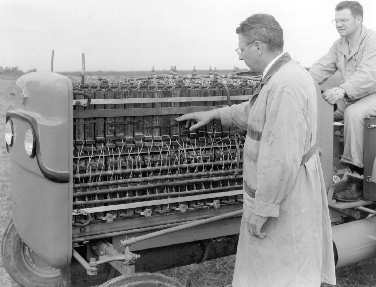
Welcome to the 1950's...

fuel_cell_tractor01.jpg


They're not going to stand up to the government and tell them to pound sand because they know that won't work. But they often realize that they can help to shape the legislation/regulation if they participate in the process and provide feedback to the government about how things work, what they're trying to achieve, and how realistic it might be. Being involved in the process, rather than fighting the process can be much more lucrative (See Caterpillar abandoning on road diesel, and Cummins, Volvo, and DTNA happily grabbing their former market share).

They need to stand up for something.

First they were all for EV's/mpg

Now no and they are throwing away all their investment

Knowing full good and well than in 3 years everything could switch again.

And with everybody wanting to use their own in house diesel it is kind of a uphill battle for Cat to really expand their marketshare. Freightliner has Detroit and Mercedes, Pete/KW has Paccar and Cummins catches the stragglers. They have enough going on I doubt they got hurt too much by losing that destraction.

Besides that everybody with a old Pete is still lining up to swap in a Cat anyway lol.
 

Sponsored Ad


Sponsored Ad

Event Coverage

Events TRS Was At This Year

TRS Events

Member & Vendor Upgrades

Become a Supporting Member:

Or a Supporting Vendor:

Recently Featured

Want to see your truck here? Share your photos and details in the forum.

TRS Latest Video

TRS Merch

Follow TRS On Instagram

TRS Ranger Sponsors


Sponsored Ad


Sponsored Ad


Product Suggestions

Back
Top