You are using an out of date browser. It may not display this or other websites correctly.
You should upgrade or use an alternative browser.
You should upgrade or use an alternative browser.
Ford doesn't want you to fix your own vehicle.
- Thread starter Jim Oaks
- Start date


PetroleumJunkie412
Back from Dirtman's Basement
⭐Supporting Member
TRS Event Participant
TRS 20th Anniversary
- Joined
- Oct 31, 2018
- Messages
- 8,616
- Points
- 601
- City
- Gotham
- State - Country
- PA - USA
- Vehicle Year
- 1988
- Transmission
- Manual
- My credo
- Let's see Paul Allen's Ranger.
FIFYYeah, owning a shop and removing emissions for people is not the same as me replacing my brakes.... yet.

First Brands.I saw a video the other day that alleged that a big company bought a lot of the parts companies and parts rebuilding companies like Cardone. Tjen, they shut it all down abdcwent out of business. So, supposedly, there is almost nobody rebuilding or reconditioning parts any more. This is getting ridiculous and it makes me very, very angry. This is America, home of the free.
I can't afford to buy new vehicles and I don't like most of them.
bought a lot then "issues" drained all of them.

Snoranger
Professional money waster
TRS Forum Moderator
TRS Event Staff
⭐Supporting Member
💻 TRS Socials
Article Contributor
ASE Certified Tech
TRS Event Participant
TRS 25th Anniversary
VAGABOND
GMRS Radio License
- Joined
- Nov 25, 2007
- Messages
- 14,039
- Points
- 3,101
- State - Country
- NJ - USA
- Vehicle Year
- '79,'94,'02,'23
- Vehicle
- Ford Ranger
- Engine
- 2.3L EcoBoost
- Transmission
- Automatic
- My credo
- I didn't ask for your life story, just answer the question!
So they don’t want us working on our own junk. That will work out great. These mouth breather “mechanics” at the local dealerships can’t fix a ham sandwich, let alone a vehicle. We send a lot of vehicles out for warranty and outside vendor repairs to all different dealers. It’s VERY rare that they fix it the first time.
It takes a week or 2 before they can get to it. 3-5 days to get the parts, and 2-4 more to complete the job.
It takes a week or 2 before they can get to it. 3-5 days to get the parts, and 2-4 more to complete the job.

Pay attention to all of Ford's latest patents. THAT will tell you the future they want to see.

lil_Blue_Ford
Cut & Weld
TRS Forum Moderator
⭐Supporting Member
💻 TRS Socials
TRS Event Participant
TRS 20th Anniversary
TRS 25th Anniversary
V8 Engine Swap
- Joined
- Aug 6, 2007
- Messages
- 13,523
- Points
- 3,101
- City
- Butler
- State - Country
- PA - USA
- Vehicle Year
- 2000
- Vehicle
- Ford Ranger
- Engine
- 5.0L
- Transmission
- Automatic
- Total Drop
- 4”
Well, see you’re not understanding. They really would prefer that the stuff just can’t be fixed and you have to throw it away and buy a new $80k+ vehicle every time it breaks.So they don’t want us working on our own junk. That will work out great. These mouth breather “mechanics” at the local dealerships can’t fix a ham sandwich, let alone a vehicle. We send a lot of vehicles out for warranty and outside vendor repairs to all different dealers. It’s VERY rare that they fix it the first time.
It takes a week or 2 before they can get to it. 3-5 days to get the parts, and 2-4 more to complete the job.

Uncle Gump
Boomers gotta Boom
TRS Forum Moderator
TRS Event Staff
TRS Event Participant
TRS 25th Anniversary
VAGABOND
- Joined
- Sep 17, 2018
- Messages
- 17,271
- Points
- 601
- City
- Ottawa
- State - Country
- IL - USA
- Other
- 1986 Bronco II
- Vehicle Year
- 2006
- Vehicle
- Ford Ranger
- Drive
- 4WD
- Engine
- 4.0L
- Transmission
- Automatic
- Total Lift
- 1 inch
- Tire Size
- 265/75/16
- My credo
- Lead or follow... or just get out of my way
We're from the government... and we're here to help.
They've been inching this thing forward for years.
Makes me wish I had picked up more spares when the getting was easier.
They've been inching this thing forward for years.
Makes me wish I had picked up more spares when the getting was easier.
PetroleumJunkie412
Back from Dirtman's Basement
⭐Supporting Member
TRS Event Participant
TRS 20th Anniversary
- Joined
- Oct 31, 2018
- Messages
- 8,616
- Points
- 601
- City
- Gotham
- State - Country
- PA - USA
- Vehicle Year
- 1988
- Transmission
- Manual
- My credo
- Let's see Paul Allen's Ranger.
Pay attention to all of Ford's latest patents. THAT will tell you the future they want to see.
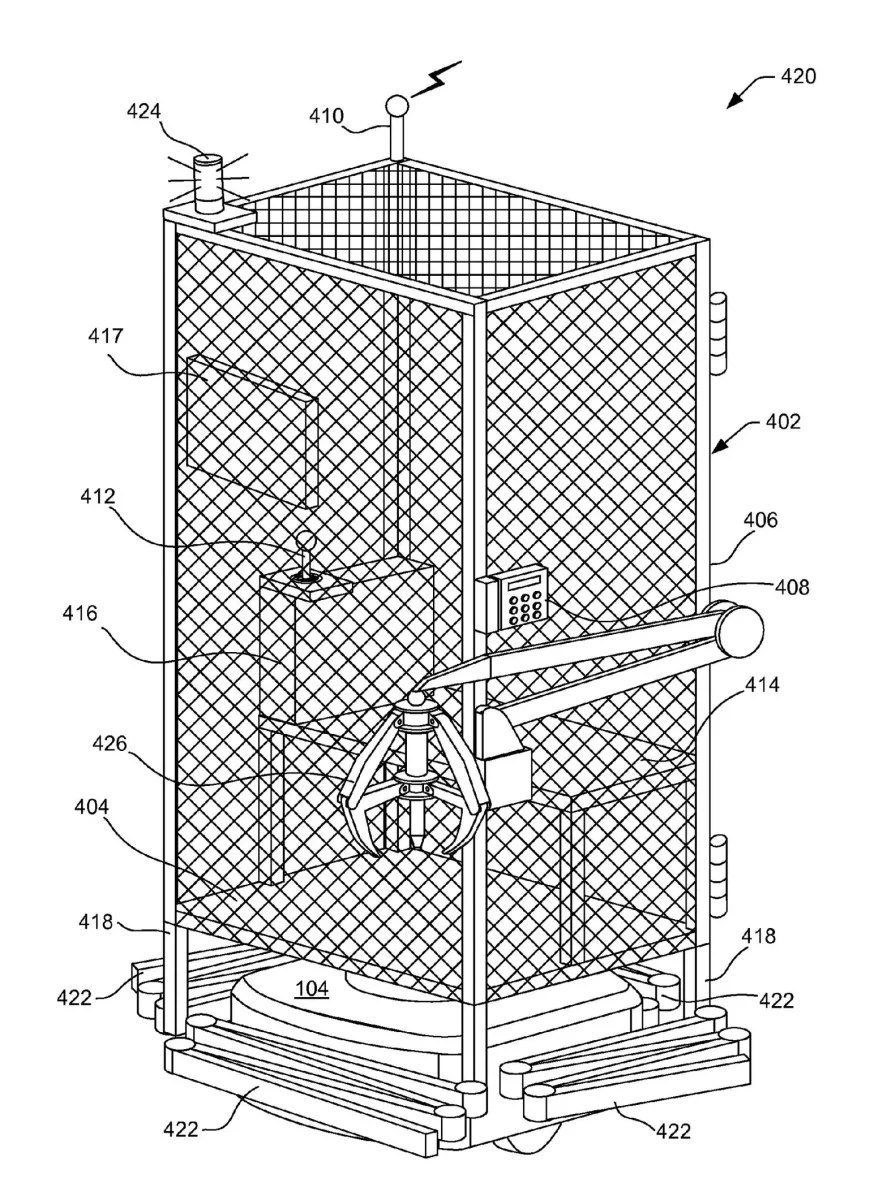
Patent US9280157B2
A sort of cage to put a worker in so they can assist a robot as it picks orders from a warehouse.
US9280157B2 - System and method for transporting personnel within an active workspace - Google Patents
Disclosed herein is a human transport device and associated system to transport a user within an active workspace. The human transport device may include a platform to support a user, an enclosure coupled to the platform to surround the user, a drive subsystem to power the human transport...
patents.google.com
Filed by Amazon in 2013, approved and granted in 2016.
Nightmare fuel techno-dystopia aside, how long before someone tries to turn it into a rock crawler...

- Joined
- Nov 13, 2018
- Messages
- 5,261
- Points
- 601
- City
- Canaan
- State - Country
- NH - USA
- Vehicle Year
- 1993
- Vehicle
- Ford Ranger
- Drive
- 2WD
- Engine
- 351
- Transmission
- Automatic
- Total Drop
- 3"
- Tire Size
- 235/55R16
- My credo
- If you don't have time to do it right will you have time to do it over?
Deleting emissions equipment isn't "fixing your own car", he committed a federal crime and got caught.
I know my opinions are not going to be popular here.
After 42 years in a dealer service department I figured out that independents don't know what they don't know. We had to pay for access to training and service information that he thinks should be free to everyone. We only had between 8 and 11 techs and a decade ago I was spending $8,000- $10,000 a year for technicians to do online training and for hotels and travel expenses so they could attend classroom training- and that doesn't include the lost hours in the shop. I've seen a lot of botched repairs and independent garages convinced the customer that Ford was at fault for what they did wrong. Some people believe the untrained little guy somehow knows what dealer techs do not.
Car companies are required by law to produce parts for the period of the warranty only and with today's complicated vehicles that will cause difficulty when they get older. Aftermarket companies won't produce parts unless there is a big enough demand to make it profitable.
I hadn't thought about the effect of untrained "techs" having the ability to reprogram things like automatic braking and evasive steering- that's the stuff of nightmares.
I firmly agree that subscriptions to keep options functioning are wrong, if you pay for something it is yours.
This guy with the gray hair(like me) and a man bun(not like me) wants you to believe he's some kind of tech, no tech would have all that jewelry on his hands and wrists.
I know my opinions are not going to be popular here.
After 42 years in a dealer service department I figured out that independents don't know what they don't know. We had to pay for access to training and service information that he thinks should be free to everyone. We only had between 8 and 11 techs and a decade ago I was spending $8,000- $10,000 a year for technicians to do online training and for hotels and travel expenses so they could attend classroom training- and that doesn't include the lost hours in the shop. I've seen a lot of botched repairs and independent garages convinced the customer that Ford was at fault for what they did wrong. Some people believe the untrained little guy somehow knows what dealer techs do not.
Car companies are required by law to produce parts for the period of the warranty only and with today's complicated vehicles that will cause difficulty when they get older. Aftermarket companies won't produce parts unless there is a big enough demand to make it profitable.
I hadn't thought about the effect of untrained "techs" having the ability to reprogram things like automatic braking and evasive steering- that's the stuff of nightmares.
I firmly agree that subscriptions to keep options functioning are wrong, if you pay for something it is yours.
This guy with the gray hair(like me) and a man bun(not like me) wants you to believe he's some kind of tech, no tech would have all that jewelry on his hands and wrists.
- Joined
- May 28, 2021
- Messages
- 1,059
- Points
- 601
- City
- Virginia
- Vehicle Year
- 2011
- Engine
- 4.0L
- Transmission
- Automatic
The push to limit who can repair vehicles is about the interrelated systems on newer vehicles. Ford doesn't care about older Rangers. It cares about the safety (actually nanny, but I'll leave that alone) and "connected vehicle" systems being phased in. Neither the automakers nor the government want anyone making jackleg "repairs" or modifications that affect those systems.
I'm not going to comment any further on the connected vehicle systems that allow vehicles to communicate with one another while driving, supposedly to prevent accidents, but that technology is coming in quickly and is being pushed by national governments. Europe is farther down that road than even North America.
There is already concern about hackers affecting these electronic systems, so the powers that be definitely don't want Fred's Auto Shop ("Last year I couldn't even spell mechanic, but now I are one!" ) tinkering with them or mechanical stuff linked to those.
I'm not going to comment any further on the connected vehicle systems that allow vehicles to communicate with one another while driving, supposedly to prevent accidents, but that technology is coming in quickly and is being pushed by national governments. Europe is farther down that road than even North America.
There is already concern about hackers affecting these electronic systems, so the powers that be definitely don't want Fred's Auto Shop ("Last year I couldn't even spell mechanic, but now I are one!"
) tinkering with them or mechanical stuff linked to those.
PetroleumJunkie412
Back from Dirtman's Basement
⭐Supporting Member
TRS Event Participant
TRS 20th Anniversary
- Joined
- Oct 31, 2018
- Messages
- 8,616
- Points
- 601
- City
- Gotham
- State - Country
- PA - USA
- Vehicle Year
- 1988
- Transmission
- Manual
- My credo
- Let's see Paul Allen's Ranger.
I hadn't thought about the effect of untrained "techs" having the ability to reprogram things like automatic braking and evasive steering- that's the stuff of nightmares.
With a telematics module and over the air update capabilities, it's not techs you have to worry about.
I firmly agree that subscriptions to keep options functioning are wrong, if you pay for something it is yours.
Well, you may think that, but from a business standpoint subscription models are the ultimate in ROI; you're basically guaranteed to see a tidy 2%+ per quarter increase on profitability if you oblige consumers to rent what they "own."
You're in stakeholder capitalism now - this is not the economy you grew up in. A few buried changes in a sales agreement or EULA, and a manufacturer or vendor owns a percentage of your income basically forever. Ownership is no longer "ownership" if a sales contract is set up properly, it is just a murky lease agreement that they can leverage against you at any given time. Why not apply that to vehicles? It's a critical and necessary thing, which means you are absolutely going to pay it, which means exceptional ROI.
Is it moral or ethical? Who cares. The only thing that matters is a 2%+ increase in profitability quarter after quarter. Otherwise, one would run the risk of catching hands from the SEC for failing a fiduciary duty clause in their contract, which at a minimum leads to dismissal, and at a maximum prison time.
Don't like it? Too bad. You're not a stakeholder. Stakeholders determine the direction of an economy. You are an individual consumer. You'll get with the modern world, or fall off a margin and literally nobody will notice.
Besides, what are you going to do, start a car company?
Lol.
Lmao.
No offense intended, Walt. Just a thought exercise. Love ya buddy!
Uncle Gump
Boomers gotta Boom
TRS Forum Moderator
TRS Event Staff
TRS Event Participant
TRS 25th Anniversary
VAGABOND
- Joined
- Sep 17, 2018
- Messages
- 17,271
- Points
- 601
- City
- Ottawa
- State - Country
- IL - USA
- Other
- 1986 Bronco II
- Vehicle Year
- 2006
- Vehicle
- Ford Ranger
- Drive
- 4WD
- Engine
- 4.0L
- Transmission
- Automatic
- Total Lift
- 1 inch
- Tire Size
- 265/75/16
- My credo
- Lead or follow... or just get out of my way
Great... to much exercise.
I'm gonna need a nap...
I'm gonna need a nap...

alwaysFlOoReD
Forum Staff Member
TRS Forum Moderator
⭐Supporting Member
TRS 20th Anniversary
TRS Banner 2012-2015
- Joined
- Apr 13, 2009
- Messages
- 16,316
- Points
- 3,101
- Vehicle Year
- '06, '11
- Engine
- 3.0L
- Transmission
- Automatic
You make good points about our current market. And a stakeholder is not just big corps and multi-billionaires. It's the average person that buys stocks... So before anyone bitches, look in the mirror. It's going to take a gigantic shift in thought for any change, and I'm not holding my breath.With a telematics module and over the air update capabilities, it's not techs you have to worry about.
Well, you may think that, but from a business standpoint subscription models are the ultimate in ROI; you're basically guaranteed to see a tidy 2%+ per quarter increase on profitability if you oblige consumers to rent what they "own."
You're in stakeholder capitalism now - this is not the economy you grew up in. A few buried changes in a sales agreement or EULA, and a manufacturer or vendor owns a percentage of your income basically forever. Ownership is no longer "ownership" if a sales contract is set up properly, it is just a murky lease agreement that they can leverage against you at any given time. Why not apply that to vehicles? It's a critical and necessary thing, which means you are absolutely going to pay it, which means exceptional ROI.
Is it moral or ethical? Who cares. The only thing that matters is a 2%+ increase in profitability quarter after quarter. Otherwise, one would run the risk of catching hands from the SEC for failing a fiduciary duty clause in their contract, which at a minimum leads to dismissal, and at a maximum prison time.
Don't like it? Too bad. You're not a stakeholder. Stakeholders determine the direction of an economy. You are an individual consumer. You'll get with the modern world, or fall off a margin and literally nobody will notice.
Besides, what are you going to do, start a car company?
Lol.
Lmao.
No offense intended, Walt. Just a thought exercise. Love ya buddy!
PetroleumJunkie412
Back from Dirtman's Basement
⭐Supporting Member
TRS Event Participant
TRS 20th Anniversary
- Joined
- Oct 31, 2018
- Messages
- 8,616
- Points
- 601
- City
- Gotham
- State - Country
- PA - USA
- Vehicle Year
- 1988
- Transmission
- Manual
- My credo
- Let's see Paul Allen's Ranger.
Ah, I'm referring to the "Stakeholder" thing (capital S) vs "stakeholder" (you). The modern Stakeholder being the spin on macroeconomic theory, vs the older Friedman theory on Shareholder capitalism. As time goes on, stakeholder benefit seems to be in proportion to percentage of ownership of the global liquidity pool, but I digress and will withold commentary.You make good points about our current market. And a stakeholder is not just big corps and multi-billionaires. It's the average person that buys stocks... So before anyone bitches, look in the mirror. It's going to take a gigantic shift in thought for any change, and I'm not holding my breath.
For those in the back, this means the worlds largest corporations are now driven by "what makes the world a better place," instead of solely "what delivers maximum ROI to a holder of this company's stock." Who determines this? Annual corporate meetings where they determine what morals and ethics you will fund with your purchases. Keep in mind, the SEC framework of fiduciary duty is still not being violated in this in any sense of the term - the company is delivering maximum value to the shareholders by also making sure they are being the best company possible in terms of moral and ethical impact on a global scale. Most of the Fortune 500, if not all at this point, have signed on.
From a business standpoint, its a great way to sluff off annoying things like lawsuits about what are "human rights" (Nestlé, ROC Cosmetics, Halliburton, etc) or other liabilities like consumer class actions. After all, the company is absolutely best serving everyone because they said so. They even had a meeting about it, and everything was reviewed by legal. Its all just fine. Be happy about it.

From a vox populi standpoint, not hard to see how this can go very haywire very quickly.
alwaysFlOoReD
Forum Staff Member
TRS Forum Moderator
⭐Supporting Member
TRS 20th Anniversary
TRS Banner 2012-2015
- Joined
- Apr 13, 2009
- Messages
- 16,316
- Points
- 3,101
- Vehicle Year
- '06, '11
- Engine
- 3.0L
- Transmission
- Automatic
Most of what you said is over my pay grade, so I'm joining uncle Gump...Ah, I'm referring to the "Stakeholder" thing (capital S) vs "stakeholder" (you). The modern Stakeholder being the spin on macroeconomic theory, vs the older Friedman theory on Shareholder capitalism. As time goes on, stakeholder benefit seems to be in proportion to percentage of ownership of the global liquidity pool, but I digress and will withold commentary.
For those in the back, this means the worlds largest corporations are now driven by "what makes the world a better place," instead of solely "what delivers maximum ROI to a holder of this company's stock." Who determines this? Annual corporate meetings where they determine what morals and ethics you will fund with your purchases. Keep in mind, the SEC framework of fiduciary duty is still not being violated in this in any sense of the term - the company is delivering maximum value to the shareholders by also making sure they are being the best company possible in terms of moral and ethical impact on a global scale. Most of the Fortune 500, if not all at this point, have signed on.
From a business standpoint, its a great way to sluff off annoying things like lawsuits about what are "human rights" (Nestlé, ROC Cosmetics, Halliburton, etc) or other liabilities like consumer class actions. After all, the company is absolutely best serving everyone because they said so. They even had a meeting about it, and everything was reviewed by legal. Its all just fine. Be happy about it.
From a vox populi standpoint, not hard to see how this can go very haywire very quickly.
Sponsored Ad

America 250
Latest posts
-

-
1990 ford ranger 300 swap in progress
- Latest: bobbywalter
-

-

-
 California banning "high" rolling resistant tires
- Latest: Li'l Work Truck
-

-

Featured Rangers
TRS Latest Video
Official TRS Merchandise
Follow TRS On Instagram