Quick Overview — What This Guide Covers
This guide helps you plan, build, and optimize a 1983–2011 Ford Ranger 4×4 for off-road use — from tire choice, suspension, axles, gear ratios, lockers, and engine swaps, to model year-specific build examples. Use this as a blueprint to avoid costly mistakes and choose the right parts for your Ranger’s intended trail purpose.
What Are You Going to Use Your Ranger For?
Before choosing parts, you need to decide how the truck will actually be used. Every off-road discipline places different demands on suspension, tires, gearing, and drivetrain strength.
Common Ranger off-road uses include:
- Camping / overlanding
- Hunting
- Trail use
- Daily driver / weekend off-roader
- Mud truck
- Sand dunes
- Pre-runner
- Rock crawler
Why this matters:
Being realistic about how you plan to use your Ranger will help to ensure that you’re making the proper modifications and choosing the right parts.
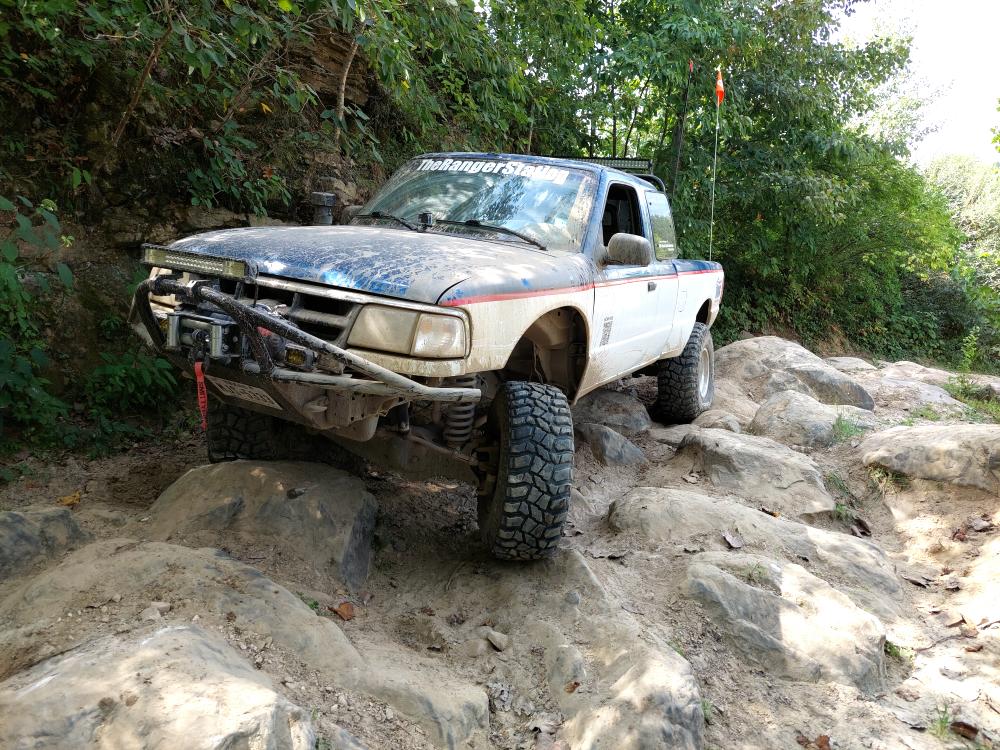
I’ll use the photo of my 1996 Ford Ranger above as an example. That Ranger has been able to take me anywhere I could want to go off-road. But it’s not a serious rock crawler. The 33-inch tires limit the size of the rocks I could crawl, and larger tires would require different gears and possible stronger axles.
Which Front Suspension Does Your Ford Ranger Have?
Direct Answer
1983–1997 Ford Rangers use a Twin-Traction Beam (TTB) front suspension, while 1998–2011 Ranger’s use a Short/Long Arm (SLA) torsion-bar setup. These two systems require completely different methods for lifting the suspension, alignment solutions, and have different off-road limits and benefits.
Ford Ranger Front Suspension Types Explained (TTB vs IFS)
Modify the Correct System (Do Not Skip This)
- 1983–1997 Ford Ranger TTB Suspension Modification Guide
- 1998–2011 Ford Ranger IFS (SLA) Suspension Modification Guide
Important: Lift kits and suspension advice are not interchangeable between these two systems. Always follow the guide that matches your model year.
Suspension Lifts, Body Lifts, and Fender Modifications
Direct answer:
A suspension lift increases ground clearance; a body lift adds tire clearance cheaply; cutting or flaring fenders makes room for big tires with less lift. Some hardcore builds use a combination of all three.
Suspension Lifts
- Increase ground clearance under the frame and drivetrain
- Improve approach, breakover, and departure angles
- Raises center of gravity and will have a negative effect on handling potentially increasing chances of rollover
- Do not affect how much clearance is between the ground and the axle; only tires size can do that
Body Lifts
- Are a 2-inch or 3-inch spacer bolted between the body and the frame
- Provide tire clearance at a lower cost
- Do not increase ground clearance
- Are sometimes used in addition to a suspension lift to fit larger tires.
Fender Trimming and Flares
- Physical expansion of wheel openings
- Allows room for larger tire diameters
- Often required on 1983-1992 Rangers
- Often used with lifts for 35″+ tires
Tip: 1983-1992 Ford Ranger frequently need fender trimming for 33″ and larger tires
Pro Tip: Fiberwerx and McNeil Racing make off-road fiberglass bedsides and front fender with significantly larger wheel openings for larger tires.
Choosing the Right Tire Tread for Your Ranger
When upgrading your Ranger for off-road use, tire size is just one piece of the puzzle. The tread type you choose plays a huge role in traction, durability, and overall performance on trails, mud, and rocky terrain.
- All-Terrain (AT): Balanced for both highway and light off-road use. Provides good traction on dirt, gravel, and light mud without sacrificing comfort or longevity on pavement.
- Rugged-Terrain (RT): A hybrid designed for more aggressive off-road conditions while still maintaining decent highway manners. Offers deeper lugs and stronger sidewalls for mixed terrain adventures.
- Mud-Terrain (MT): Extreme off-road focus. Aggressive tread pattern and reinforced sidewalls maximize grip in mud, sand, and rocks, but may be noisy and wear faster on pavement.
For a deeper dive into choosing the perfect tire for your off-road build—including detailed comparisons, traction insights, and tips for each tread type—check out our dedicated guide: Choosing An Off-Road Tire For Your Ranger.
Choosing Tire Size for an Off-Road Ranger
Tire size affects gearing, axle stress, steering, braking, and overall reliability. Most Ford Rangers perform best off-road with 33-inch tires, while 35-inch tires require gearing changes and stronger axles.
| Tire Size | Best Use | Notes |
|---|---|---|
| 31″ | Light off-road | Great for mild trails |
| 33″ | All-around use | Best balance for most builds |
| 35″ | Aggressive wheeling | Max size for stock axles |
| 36″+ | Serious builds | Axle swaps strongly recommended |
Tire Size vs Gears (Crucial Match)
Larger tires reduce your effective gear ratio, causing sluggish acceleration, poor crawl control, and increased drivetrain stress. Re-gearing restores drivability and off-road performance by matching axle ratios to tire size and engine power.
| Tire Size | Recommended Gears (V6) |
|---|---|
| 31″ | 4.10 |
| 33″ | 4.56 |
| 35″ | 4.88 – 5.13 |
Pro Tip: Use the Ranger Station gear & Crawl Ratio calculators to dial in exact ratios for your setup with the interactive tools below.
Ford Ranger Gear & Crawl Ratio Calculators
Axles: What’s Strong Enough?
Quick answer:
Stock axles handle up to 33–35″ depending on model; heavy off-road demands stronger axles and locking hubs.
Front Axles
- Dana 28 TTB (1983-1989): Suitable for 31″ tires. 33″ tires may cause the shafts or hubs to break under heavy off-road loads
- Dana 35 TTB (1990-1997): Good for 33–35″ tires. Stock flange style hubs are the weak link, but stronger ones are available.
- Dana 35 SLA (1998-2011): Good for 33–35″ tires
Tip: A Dana 35 TTB will bolt in place of a Dana 28 TTB. Dana 28 → Dana 35 Axle Swap
Tip: You should convert to a Dana 44 for 36″ or aggressive rock crawling and a Dana 60 for 37″ or larger tires. You can also upgrade your Dana 35 with larger hub bearings and locking hubs from a Dana 44 TTB. For more details check out: Should You Replace A Dana 35 TTB With A Dana 44?
For more information on the front axle in your 1993-1997 Ford Ranger, check out: Ford Ranger 4×4 Front Axles 1983-1997
For more information on the front axle in your 1998-2011 Ford Ranger, check out: 1998-2011 Ford Ranger 4×4 Dana 35 SLA Front Axle
Rear Axles
- Ford 7.5″: OK to 33″, limited strength
- Ford 8.8″ (28-spline): good for 33–35″
- Ford 8.8″ (31-spline): ~30% stronger — excellent choice for tires up to 36″
Tip: The Ford 8.8″ axle from a 1995-2003 Ford Explorer came with disc brakes.
For more information on what rear axle, differential type, and gear ratio your Ranger has, check out: Ford Ranger Rear Axles (1983-2011)
Solid Axle Swaps (SAS): When Do They Actually Make Sense?
Many off-road enthusiasts assume that a solid front axle—like a Dana 44 or larger—is required for a capable Ranger build. From my experience, that’s not true for most setups. A solid axle swap only becomes necessary for extreme builds, usually when you’re running 36″ tires or bigger, or seriously focused on rock crawling. For beginner and intermediate builds, your stock TTB (1983–1997) or SLA (1998–2011) front suspension is more than enough.
1990–1997 Dana 35 TTB Considerations
- The Dana 35 TTB has been a reliable choice in off-road racing thanks to its long wheel travel and durability.
- Stock Dana 35 shafts are strong enough for most builds, though the flange-style locking hubs are the weak point.
- Upgrading to Dana 44 knuckles and stub shafts lets you use stronger 1/2-ton Dana 44 manual locking hubs without swapping the whole axle.
For more info on hybrid Dana 35/Dana 44 knuckle swaps, check out:
People have even found a way to mount the Dana 44 spindle and hub on the Dana 35 TTB knuckle. See: Dana 44 Spindle & Hub Conversion On Dana 35 TTB
1998–2011 SLA Front Suspension Considerations
- SLA front suspensions have limited wheel travel and almost no options for front lockers.
- If you’re planning on 35″ tires or bigger, a Dana 44 solid axle swap is worth considering for these Rangers.
Rule of Thumb
- 33–35″ tires: stock Dana 35 (TTB) or SLA front is fine.
- 35–36″ tires: Dana 44 knuckle swap on Dana 35.
- 36–38″+ tires: full Dana 44 or Dana 60 solid axle.
Keep in mind that a full Dana 44 swap—or even using Dana 44 knuckles—usually requires:
- Wheels with a 5×5.5 bolt pattern
- An adapter on the rear axle if keeping the stock 5×4.5 bolt pattern
Bottom line: Most Ranger builds never need a solid axle swap. I always recommend getting the most out of your stock suspension first—lift, tires, lockers, and gearing will take you far. Only when your build goals push past the limits of a Dana 35 TTB or SLA front suspension does a SAS become a practical choice.
Pro Tip: Before committing to a solid axle swap, maximize your current setup—many Rangers can handle more off-road abuse than you’d expect without swapping axles.
Lockers & Differentials — When Power Matters
Direct answer:
An open differential sends power to the wheel with least traction. A limited slip differential will send power to both wheels equally when traveling straight, but only the wheel with traction if one is spinning. Lockers send equal power to both wheels — essential for mud, rocks, and technical trails.
Diff Choices
- Open Differential: stock, least capable
- Limited Slip: better traction on grip transitions
- Locker: best for technical off-road
Note: Lockers come in automatic, selectable, or manual varieties and may require re-gearing installation.
Pro Tip: You can add a Lock-Right locker to an open differential, but a limited slip would have to be replaced with a complete locking differential. I would always suggest replacing your differential with a selectable locker if you can afford it.
Transmissions: Why First Gear Matters Off-Road
Quick Answer: Ford Ranger automatic transmissions use a 2.47:1 first gear, while manual transmissions range from 3.40:1 to 3.96:1. The deeper first gear in manuals provides more torque off the line, which becomes increasingly important when running larger tires or navigating slow, technical terrain.
Automatic Transmission First Gear Ratios
| Transmission Type | First Gear Ratio |
|---|---|
| 4-Speed Automatic (A4LD / 4R44E / 4R55E) | 2.47 |
| 5-Speed Automatic (5R44E / 5R55E) | 2.47 |
Manual Transmission First Gear Ratios
| Model Years | First Gear Ratio |
|---|---|
| 1983–1984 | 3.960 |
| 1985–1992 | 3.769 |
| 1991–2008 | 3.762 |
| 1990–2011 (4.0L) | 3.400 |
Why First Gear Is the One That Matters
When you’re trying to get a Ranger moving from a dead stop on the trail, first gear is everything. The automatics all start at 2.47:1, which works fine on the street but feels tall once you add tire size or get into slow, technical terrain.
The manual transmissions, with first gears in the 3.4–3.96 range, give you noticeably more torque right off idle. That difference becomes obvious when climbing ledges, easing over rocks, or simply getting the truck rolling without riding the brakes or building excess heat.
With automatics, the torque converter helps, but heat is the real enemy. On slow trails, the engine is working hard while airflow is minimal. That’s why I recommend an auxiliary transmission cooler for any off-road Ranger running an automatic.
Engines, Power, and Drivetrain Considerations
The stock 4.0L V6 provides adequate power for most off-road Ranger builds when properly geared. Larger tires increase strain on the engine and reduce the effective size of the axle gear ratio, making re-gearing more important than raw horsepower.
Stock power options:
- 1983-1985 2.8L V6 came with 115 HP / 150 FT LB of Torque
- 1986-1992 2.9L V6 came with 140 HP / 170 FT LB of Torque
- 1991-2009 3.0L V6 came with 145-150 HP / 165-190 FT LB of Torque
- 1990-2000 4.0L OHV V6 came with 160 HP / 220 FT LB of Torque
- 2001-2011 4.0L SOHC V6 came with 207 HP / 238 FT LB of Torque
Common engine swap:
- 1996-2001 Ford Explorer 5.0L which came with 210 HP / 280 FT LB of Torque
Recommendation
The 4.0L OHV and 4.0L SOHC are great engines, and many find the OHV to be more reliable and easier to maintain. The 4.0L OHV is a common upgrade from the 2.8L and 2.9L engine. Heat will be the enemy of those that seek to do a 5.0L engine swap. Unless you plan to exceed a 35″ tire, and properly geared 4.0L will take you everywhere you want to go.
Model Year Build Examples (Step-by-Step)
1998-2011 Rangers
Budget Off-Road Build:
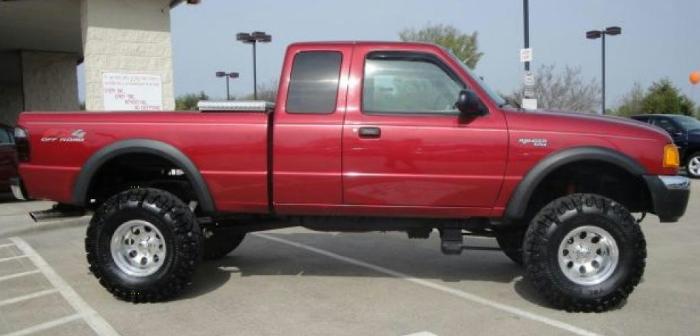
- 33″ tires + 3″ body lift
- Crank torsion bars + rear blocks
True Off-Road Build:
- Rough Country 5-Inch Suspension Lift
- Rough Country CV Driveshaft
- 33″ tires & 4.56 gears
- or 35″ tires & 4.88/5.13 gears & cutout fender flares
- Selectable rear locker
Why I recommend this:
Cranking your torsion bars will raise the front of your Ranger but give you a harsh ride and body lifts have become scarce. I recommend the Rough Country 5-inch lift and their CV driveshaft. The driveshaft angle from the 5-inch lift will quickly wear out the Rzeppa joint in your front driveshaft.
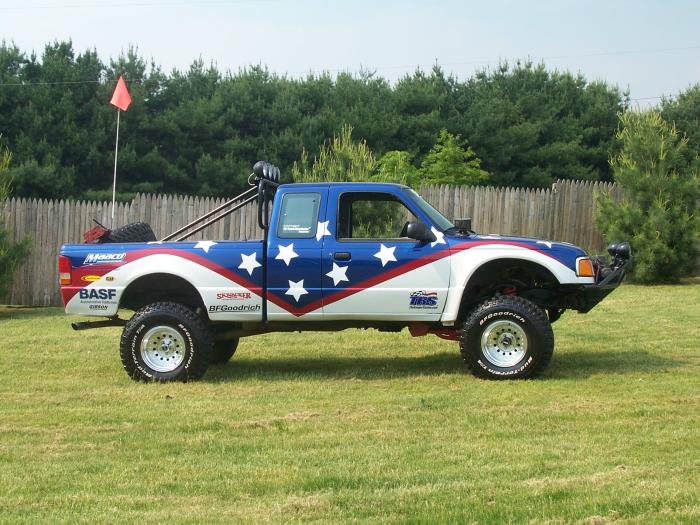
1990-1997 Ford Ranger
Note: The 1990-1992 4-cylinder Ranger came with a Ford 7.5-inch and Dana 28 axle and should follow the build suggestions for the 1983-1989 Ford Ranger.
Budget Off-Road Build:
- Skyjacker 4-inch suspension lift
- 33″ tires with fender trimming or 3″ body lift
True Off-Road Build:
- Skyjacker 6-Inch Class II Suspension (Comes with extended radius arms)
- 33″ tires & 4.56 gears
- or 35″ tires & 4.88/5.13 gears and cutout fender flares
- AVM Extreme manual locking hubs
- Selectable locker in the rear (and front if you can afford it)
Serious Off-Road Build:
- Skyjacker 6-Inch Class II Suspension (Comes with extended radius arms)
- Dana 35 TTB converted with Dana 44 TTB steering knuckles, spindles, and locking hubs
- 31-spline Ford 8.8-inch axle
- 35″ tires & 4.88/5.13 gears and cutout fender flares (or off-road fiberglass)
- Selectable locker in the front & rear
Why I recommend this:
The True Off-Road Build is the setup that I currently use, and it works exceptionally well. The Skyjacker comes with beefy suspension brackets and are the only company that makes a complete upgraded replacement bracket that mounts the passenger side beam. All other companies just include a drop plate. The extended radius arm will give your suspension more wheel travel to keep the tires in contact with the ground. A selectable locker is more ideal for the street and slick road conditions because you can control its engagement. The Dana 35 TTB with the Dana 44 TTB knuckles, spindles, and hubs essentially increases your Dana 35 TTB to the strength of a Dana 44. This gives you the axle strength to do some serious off-roading with 35″ tires.
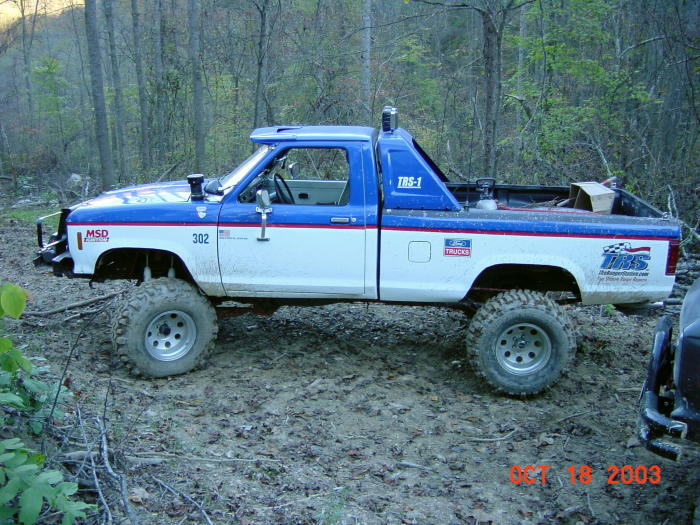
1983 Ford Ranger 4×4 with a 4-inch lift, 3-inch body lift, and 33″ tires.
1983-1989 Ford Ranger
Budget Off-Road Build
- 4-inch suspension lift
- 31″ tires
True Off-Road Build
- 6-inch Skyjacker Suspension
- 33″ tires and some fender trimming
- 4.88 gears
- Lock-Right locker in rear open diff
Serious Off-Road Build
- 6-Inch Skyjacker Class II Suspension
- Dana 35 TTB axle swap
- AVM Extreme manual locking hubs
- Ford 8.8-inch 31-spline axle swap
- Trimmed fenders
- 33″ tires & 4.88 gears
- or 35″ tires & 5.13 gears and serious fender trimming
- Selectable locker in the rear (and front if you can afford it)
Why I recommend this:
These Ranger’s came with a 2.8L or 2.9L V6, so I’m recommending the 4.88 gears vs 4.56 gears to make up for their lack of power compared to a 4.0L. I love the look of these original Ford Ranger’s, but their stock axles get maxed out with 33″ tires. But with that said, I’ve seen a 2.9L Ranger with a 4-inch lift, rear locker, and 31-inch tires that seemed to be able to go anywhere. They really are fun trucks. The stronger Dana 35 TTB and Ford 8.8 is a better option for a 33-inch tire setup.
When You’ve Outgrown This Guide
At some point, you may find that bolt-on lifts, stronger axles, and sensible tire sizes are no longer enough for the kind of off-roading you want to do. This is usually where people start looking at solid axle swaps, custom suspension work, and major drivetrain changes.
In my experience, most Rangers never need to go this far. A well-built TTB or SLA truck with the right tires, gears, lockers, and cooling will handle far more trail than most people expect. Solid axle swaps introduce new challenges — steering geometry, braking, transmission stress, and overall vehicle balance — that make them a poor choice unless your build truly demands it.
If you’re planning extreme rock crawling or running tires larger than 35″, that’s when a solid axle swap starts to make sense. At that point, you’re no longer “modifying a Ranger” — you’re engineering one.
Looking for More Ranger Build Inspiration?
If you want to see how other off-road enthusiasts are building their Ford Rangers, check out this community thread on The Ranger Station forums. Owners share their setups, lessons learned, and what they’d do differently if they started over — a great place to spark ideas for your own build:
Show Me Your Off-Road Ranger — TRS Forum Thread
Whether you’re planning a beginner-friendly setup or dreaming of a serious rock crawler, seeing real-world examples can help you visualize possibilities and get motivated for your own build.
About The Author

Jim Oaks is the founder of The Ranger Station, one of the longest-running Ford Ranger enthusiast communities on the web. He has spent over three decades owning, modifying, repairing, and driving Ford Rangers on the street, trail, and cross-country routes.
Since launching TheRangerStation.com in 1999, Jim has documented thousands of real-world Ranger builds, technical repairs, drivetrain swaps, suspension modifications, and off-road tests contributed by owners worldwide. His work has been referenced by enthusiasts, mechanics, and off-road builders looking for practical, experience-based information rather than theoretical advice.
Jim’s hands-on experience includes long-distance overland travel, trail use, drivetrain and axle upgrades, suspension tuning, and platform comparisons across multiple Ranger generations. The content published on The Ranger Station is grounded in first-hand experience and community-verified data, not marketing claims or generic specifications.